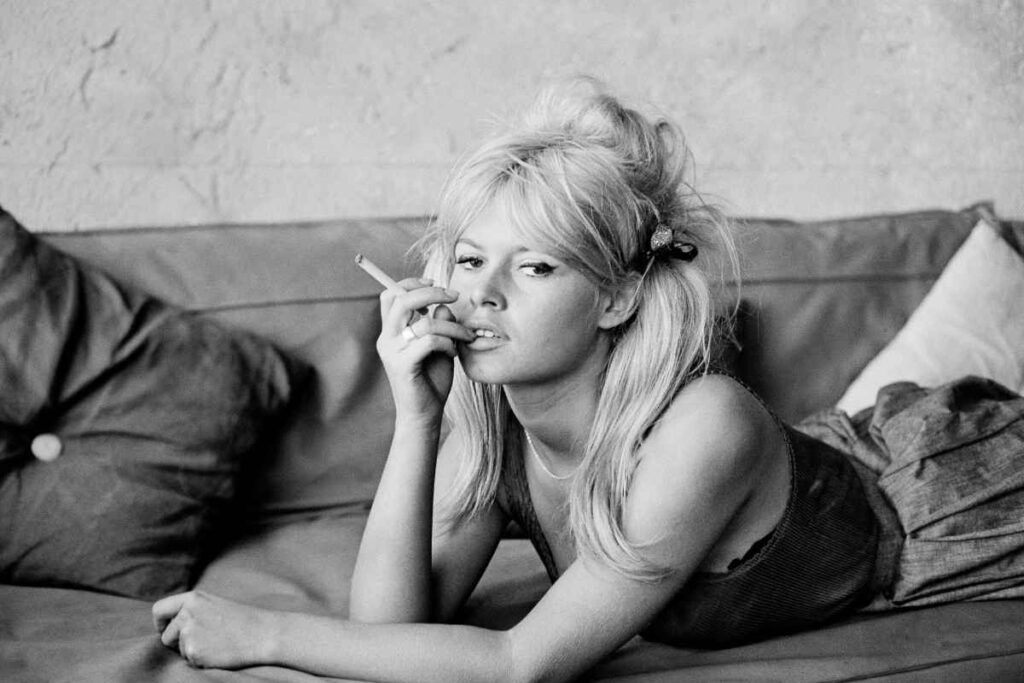
The irruption of Brigitte Bardot in the cinematic landscape of the 1950s it was a true seismic fault. Before her, femininity on the big screen was a geometric construction, plastered in moral and acting corsets. With BB cinema has discovered naturalness as scandalhis feline insolence has subverted the codes of representation and it transformed the actress from an object of desire into a subject of radical emancipation.
Bardot imposed a physical presence that dialogued with the Nouvelle Vague and anticipated the cultural revolts of ’68. His was a cinema of the body intended as a political manifesto, an aesthetics of freedom that forced the critics of the time to rewrite their grammar.
But there are five films that best crystallize his artistic and subversive trajectory.
And Too many like it a Long live Mary!
His first film Too many like it (1956), signed by her first husband Roger Vadim, it is a real Big Bang. Bardot plays the young Juliette with an unscrupulousness that annihilates bourgeois respectability. The famous barefoot dance is the point of no return. Here the myth of BB is born, a free creature who does not ask permission to exist and desire. In this frenetic mambo, Bardot kills the classic femme fatale à la Marilyn Monroe to give birth to the modern woman.
In The truth (1960)directed by Henri-Georges Clouzot, Bardot tackles what is perhaps her most visceral role. In this courtroom drama his acting sheds its Provençal radiance to become painful and angry.
The critics of the time were dazzled. Bardot demonstrated that he possessed a dramatic depth capable of withstanding the weight of an entire trial of common morality, giving voice (and real tears) to a misunderstood youth that would soon explode in the riots of ’68.
Con Privacy (1962) Louis Malle directs an almost metacinematic work, where Bardot plays… Bardot. The story of a celebrity hunted by photographers is a lucid tale of the price of freedom. In this film the actress stages her own vulnerability, transforming the siege of the paparazzi into a metaphor for the loss of identity.
But the highest point of his artistic career coincides with the meeting with Jean-Luc Godard. No Contempt (1963) Bardot becomes an abstract icon, almost a classical statue immersed in the rationalist architecture of Capri. Godard deconstructs its myth, using its beauty to reflect on the end of a love and the crisis of cinema itself. A cerebral, detached performance.
In Long live Mary! (1965) we still find Louis Malle directing but in a diametrically opposite register. Alongside Jeanne Moreau, Bardot embarks on a picaresque adventure that mixes Mexican revolution and striptease. In all respects we are witnessing the triumph of the pop cinema: ironic and profoundly free, BB demonstrates that she knows how to handle comedy with an intelligence that parodies her own sex appeal and confirms her as a timeless icon of mass culture.
Foto copertina: Copyright by production studio and/or distributor