

Of
Economics editorial team
The experience of Guild Living, which opened its first destination in Siena and plans another 15 in the next 5 years, with guests arriving also from the USA, Germany, France, the United Kingdom, attracted by the Italian lifestyle
For decades, old age has been described as a silent landing place, a season to be lived on the margins of active life, perhaps inside structures that resembled an “elsewhere” rather than a home. Today, that model no longer holds. A healthier, more curious and longer-lived generation of over 65s advances and rejects the idea of the “hospice”while it is not recognized in traditional RSAs, designed for those who need continuous healthcare. Here the demand for places that allow one to live time fully increases from year to year in a country, like Italy, which is already among the oldest in Europe, with approximately 24.7% of over 65s (2025) and which foresees, by 2050, the elderly will be over 34% of the population. The demand is for homes where one can maintain autonomy, services that facilitate everyday life, communities that nourish relationships, movement and cultural stimuli. It is the sign of an epochal transition in which aging is no longer a subtraction, but a different – and still full – form of citizenship.
The Guild Living project
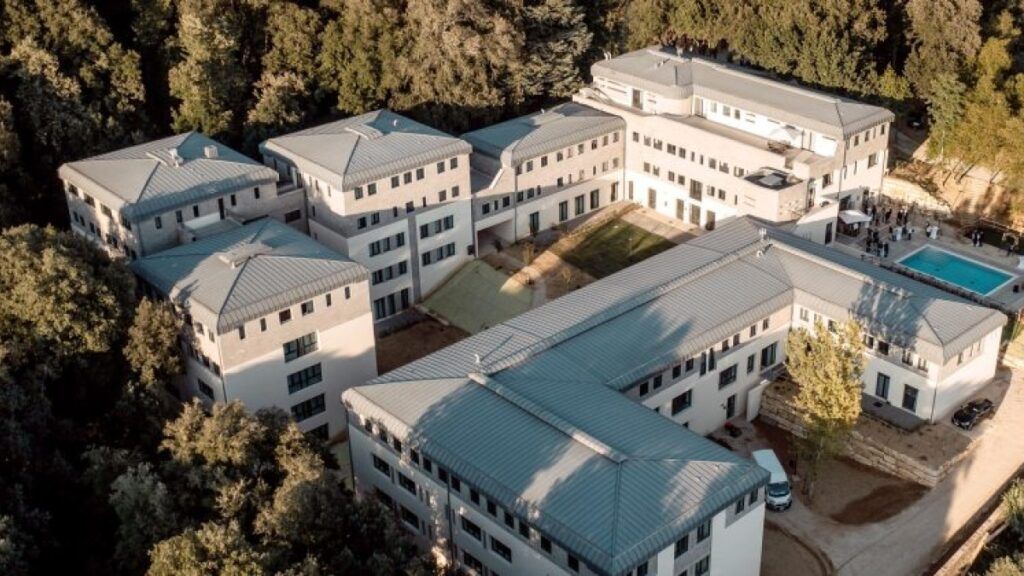
Within this transformation lies the experience of Guild Livingwhich in Italy represents one of the most defined responses to this paradigm shift. TO Sienawhere it opened its first destination, the proposal does not resemble a care facility nor a simple residence, but a place designed to live a happy longevity, day after day, like at home but with integrated services and constant attention to emotional and physical well-being. Here self-sufficient over 65s find independent apartments, common spaces, cultural programs and retreats dedicated to wellness. The idea is to become part of a community that offers authentic relationships, healthy routines, a sense of purpose. For a holiday, for a season away from the city or even to move your residence.
Future projects
In 2025, according to data provided by Guild Living, more than 5,000 people took part in the life of the residence — including permanent guests, temporary stays and participants in thematic retreats — confirming a growing demand for this way of experiencing longevity. The prospect of an increasingly aging Italian population thus becomes a business opportunity. Guild Living has grasped this and aims to expand its network: 15 new destinations in the next five yearsfrom the lakes to the Adriatic coast to new centers in Tuscany, for an investment of around 500 million. The demand for new residents does not only come from Italy: guests are expected from the United States, Germany, the Netherlands, France and the United Kingdom, attracted by the idea of combining the Italian lifestyle with a living model designed for active longevity.
What happens in the rest of the world
The phenomenon, however, goes beyond national borders. Throughout the West, senior living is experiencing a period of expansion. In the United States, as various reports tell, historic communities such as Leisure World in California have anticipated this vision since the 1960stransforming retirement into a phase full of sociality, services and opportunities. In the United Kingdom, Germany and the Netherlands there have been for years tens of thousands of housing units dedicated to those who want to remain independent, but within contexts designed to prevent isolation and fragility. Even in Italy the sector is changing its skin: new residential complexes for active seniors, recently featured in specialized magazines, focus on culture, movement, wellness and available but unobtrusive assistance, with the symbolic figure of the “guardian angels”, staff always present to support everyday life.
The analyses
International analyzes on the topic, from Forbes to other observers in the sector, agree on one point: well-being is not an accessory, but the decisive lever. Mindfulness, nutritional programs, tailored physical activities and continuous learning paths become tools to extend not only life, but the quality of life. In a Europe that is moving towards a demographic future in which the over 65s and over 80s will continue to grow, these residences are no longer niche alternatives: they are social laboratories that rethink living and the very meaning of old age.
New app The Economy. News, insights and the virtual assistant at your service.
DOWNLOAD THE APP
Subscribe to the L’Economia newsletter. Analysis and comments on the main economic events by the Corriere’s authors.
December 27, 2025 (changed December 27, 2025 | 10:33)
© ALL RIGHTS RESERVED






 for a different home: with services, community and culture for over 65s)