
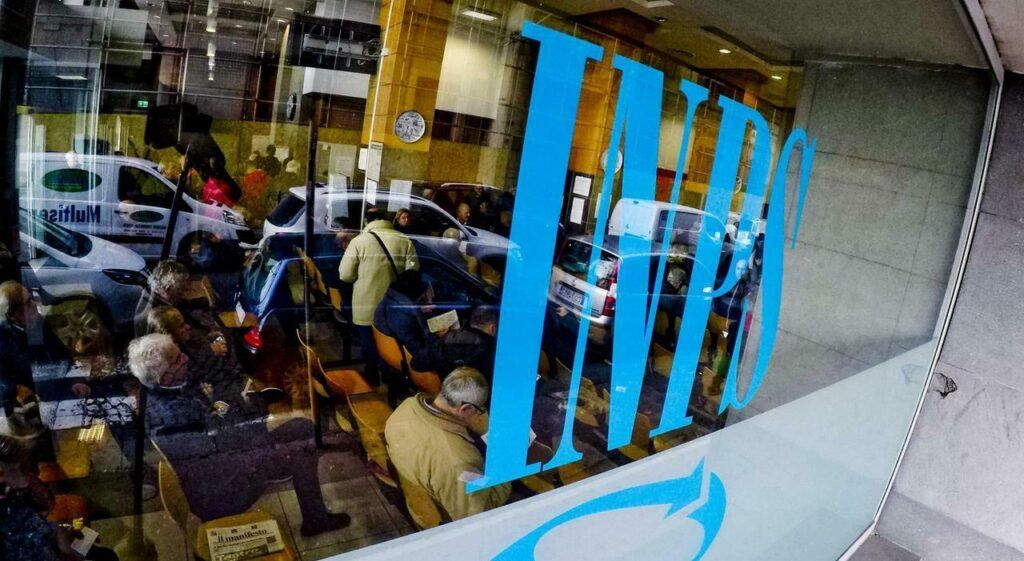
The legacy of adapting retirement age to life expectancy is, let’s face it, a difficult legacy to manage. For any government. The last one maneuver was only able to soften the step, bringing it from 2027 to just one month from the three foreseen by the regulations in force, then in 2028 the other two months will be added. The mechanism, launched for the first time in 2009, it must be said, is now written into the tables of the law of the Italian pension system. Unchangeable. The retirement age, the minimum age for retiring from work, is established based on the life expectancy calculated by Istat.
AGING
In short, the older the country gets – a pressing issue for years now given the low birth rate and the difficulty in attracting highly skilled immigrants of working age – the later we retire. Therefore, the same principle that has forced the current government – while remodulating and attenuating the effects compared to what the current legislation requires – to raise the so-called legal age for the old-age pension. Which indeed from January 1st 2027 it will increase by 30 days to 67 years and one month and from 2028 the minimum requirement will increase to 67 years and 3 months.
A first approach in this direction, but with a five-year perspective, was in law 102 of 2009. The following year, in law 122 of 2010, the then Berlusconi government established that from 2015 the retirement age would be adjusted every three years to the increase in life expectancy detected annually by Istat every 30 June. In 2011, in law 111, the same executive inserted a corrective: the mechanism was brought forward to 2013, Istat would have to present its report every year on 31 December, while the calendar of adjustments, according to the technical report of the law, provided for 3 more months between 2013 and 2015, four for each three-year period from 1 January 2016 to 31 December 2030, an additional 90 days for every three-year period from January 1, 2031 onwards.
This change followed the famous letter of 8 August 2011 signed by the then president of the ECB, Jean Claude Trichet, and his successor Mario Draghi. With which Italy was asked, which a few days earlier had broken through the wall of the 400 point spread between BTPs and the German Bund, to “further intervene in the pension system”.
At the time, one left the world of work with an old-age pension at 65. Giulio Tremonti, then Minister of Economy, claimed a cautious attitude with the choice not to introduce a forced increase in the age, because we were not “talking about car insurance, but about the lives of citizens”. Above all, an approval method was introduced that has only been fully understood over the years: the adjustment is triggered thanks to a technical automatism linked to real data (the INPS life expectancy report), is “endorsed” with a ministerial decree and does not require a parliamentary vote. And this process, according to experts, has allowed both that Italy does not dismantle its virtuous social security system and, above all, that protests and street clashes that have been tearing France apart in the last three years, for example, have not occurred in our country. Which this year had to freeze the increasingly necessary reform to raise the leaving age from 62 to 64.
For the record, the successor to TremontiElsa Fornero, had to be less prudent: the adjustments were extended to all allowances and became biannual until 2021. In reality the first took effect in 2013 (3 months), the second in 2016 (4 months), the third in 2019 (5 months), bringing the exit to 67 years. The then Prime Minister Conte froze the next one with quota 100, while due to Covid, life expectancy, decreased due to deaths, was frozen until 2023. Precisely the increase in the figure in 2024 – 83.4 years – imposed the step on the retirement age which will start from 2027. The same one that the majority has decided to attenuate: only one month will start from that year, bringing it to three from 2028. Not doing so, as the Public Budget Office calculated in a country that allocates 16 percent of GDP to social security, would have cost the public coffers 3 billion a year. Not to mention the impacts on public debt and the spread. Now at 70 basis points.
© ALL RIGHTS RESERVED
Savings and investments, every Friday
Sign up and receive news via email