
Of
Guido Olimpio
The influence of the Emirates in Africa is growing, and they now compete with Saudi Arabia
It’s the Great Game, from the Mediterranean to the Horn of Africa. The signing of a was confirmed on Sunday Israel-Greece-Cyprus military collaboration pact. It involves training, exchange of information, sharing of strategies but, probably, much more. Rumors – denied – have not ruled out the creation of an emergency response force of 2,500 men coming from the three countries.
The development encompasses three aspects. The first. The Israelis often trained in Cyprussimulating maneuvers applied in the war against Hezbollah and others to be implemented in the conflict with Iran. The second. The opponent is Turkey, projected with its project of influence in the Mediterranean basin and in neighboring Syria. The third. France and Egypt have supported Greeks and Cypriots in the past, the Emirates did the same thing, today among the most aggressive in initiatives far from the Gulf and frequently paired with Tel Aviv. For obvious reasons: pragmatism, opposition to the deployment of political Islam.
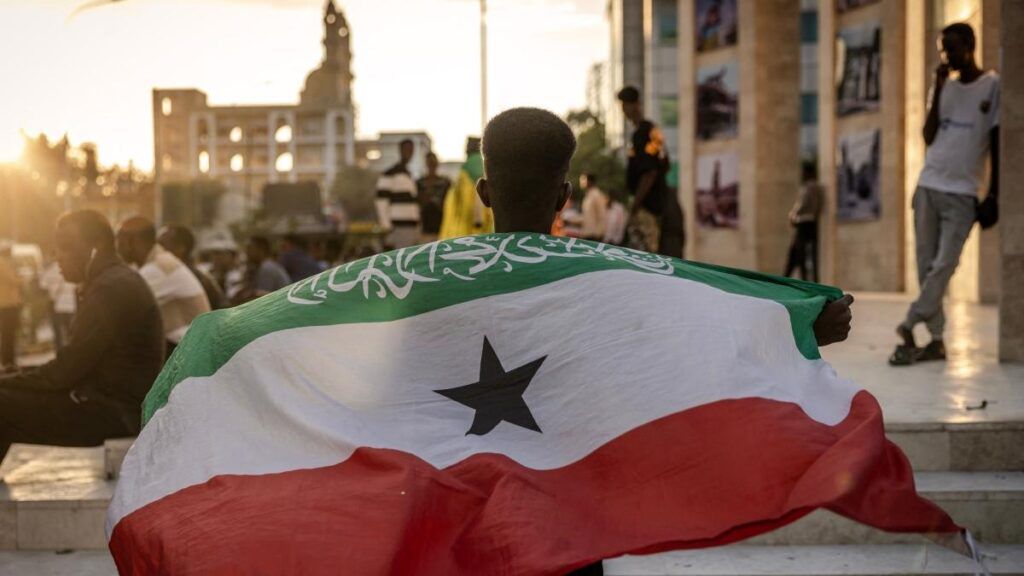
This does not stop Emiratis from investing in the Turkish economy. Business is business. We find some of these aspects in a quadrant in fibrillation, the one that contains the door of tears, Bab el Mandeb, the southern entrance to the Red Sea. Israel has just recognized – unique in the world – Somaliland, the northwestern region of Somalia.
A move that can bring many advantages. Including thepossible use of the Berbera piers, an installation managed – coincidentally – by the Dubai port authority. Nearby there is an air strip capable of accommodating large cargoes: satellite photos have revealed modern hangars and structures. Tel Aviv is interested in creating an outpost for the IDF (Navy, air force) and for intelligence that can be used to counter attacks Pro-Iranian Houthis. In fact, the Shiite movement immediately threatened retaliation.
Ties with Somaliland cannot ignore the relationship with the Emirates who have created a series of bases precisely in this area by interfering in Somali practice. For its own strategic interests but also in competition – again – with Ankara and Qatar. The Turks have a military and economic role in Somalia (ports, airports, Academy, schools, a space center) and want to expand it, a segment of an offensive across Africa. The Egyptians appeared at the rear with an assistance program in Mogadishu. Not the only ones. The Serbs have just finished preparing special forces that must guarantee protection to VIPs.
American action is extensive with continuous raids against the Al-Qaeda movement Shabaaba thorn in the side of Somalia. Maybe that’s why the moody Donald Trump, for now, has said he is against recognizing Somaliland. Which, some experts warn, is a territory with deep internal disagreementsserious rifts between clans.
Netanyahu’s critics, however, underlined the international outcry in front of Tel Aviv’s step: governments, regimes, militants found themselves side by side on the no line. There is no shortage of speculation about a possible transfer of Palestinians from Gazaa plan evoked in the past as a source of tension. And, more generally, there is a particular sensitivity along a waterway that is fundamental for trade, as demonstrated by the military installations in Djibouti of the USA, France, China, Japan and Italy.
Ethiopia then enters the game, constantly looking for an outlet to the sea. He had signed an agreement to have a corridor through which to reach Berbera, a hypothesis that was abandoned due to the Turkish intervention. Addis Ababa has also relaunched the conflict with Eritrea, again for the same reason. Note: Both Eritreans and Ethiopians have had mixed relations with the Israelis, with stories of spies, listening stations, banks. Ethiopia has benefited from the support of the Emirates: those who track transport flights have reported an intense flow of aircraft, part of a network that extends to Sudan, a crisis where the Emiratis support the RFS rebel militias. Another note: the Egyptians duel at a diplomatic level with the Ethiopians, a bitter dispute caused by the gigantic dam erected by Addis Ababa on the Nile. The barrage is seen by Cairo as an existential threat. The upheaval is even more spectacular in Yemen with the rivalry between the Emirates and Saudi Arabia which exploded with the offensive of the STC, a movement financed by the former, against the “central” government supported by Riyadh. The Emirates are aiming for oil resources and control of the southern coastal area, an expansion of their presence around Bab el Mandeb where they have set up posts. The island of Socotra is its symbol.
It is a “militant” approach. On the contrary, the Saudis are trying to lower tensions with the Shiites. Mohammed bin Salman’s internal projects, which are so dear to the Trump family, need stability, not friction. But there are times where no one is willing to lose face.
December 29, 2025
© ALL RIGHTS RESERVED