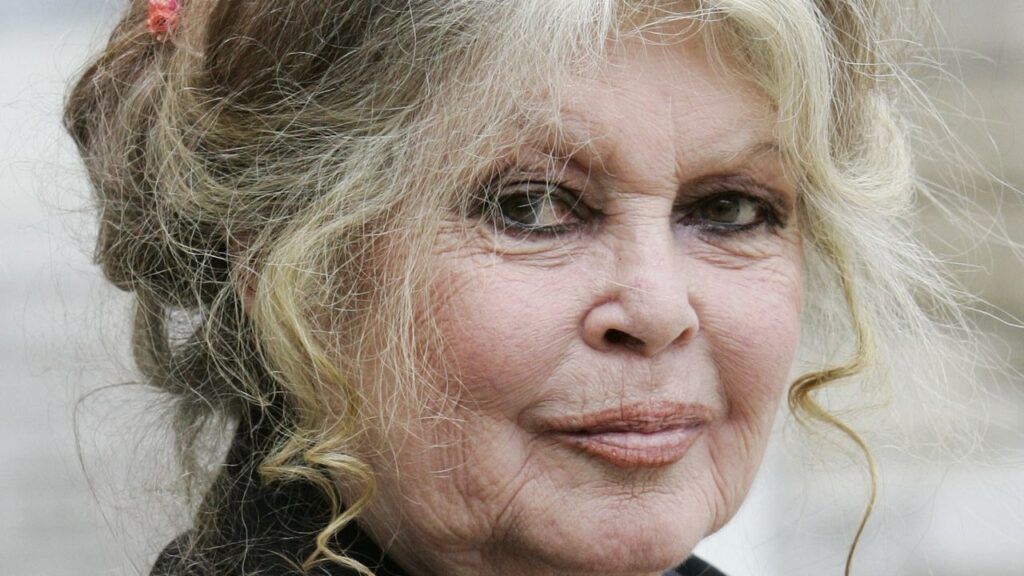
The life, but also the economic choices of Brigitte Bardot, who passed away on December 28 at the age of 91, tell a story of radical choices: fame and money were transformed into a concrete tool to protect animals. Her properties, a large part of her assets and also La Madrague, her symbolic villa in Saint-Tropez, were donated to the Brigitte Bardot Foundationwhich today represents the main heir chosen by the diva.
At the height of her fame, Brigitte Bardot’s fortune was estimated at around $65 million (54-55 million euros). But the actress herself said: “After having squandered most of my star earnings, I no longer had any income.” As, to finance the creation of the Foundation, in 1986 he organized an auction of objects, jewels and personal effectsraising 3 million francs. On that occasion she declared: “I wouldn’t have been able to raise such a sum on my own”, adding that she felt “little connected to money”. Yves Bigot, her biographer, explained that Bardot had “stripped herself of everything that belonged to her, everything linked to her cinematographic career and also to what had been given to her”.
The star’s real estate revolves around La Madragueinitially home to the Foundation: due to its exclusive position on the French Riviera and its historical value, this property is estimated between 25 and 30 million euros. In 1991 Bardot donated its bare ownership to the organization“to constitute an endowment necessary to obtain the status of recognized foundation of public utility”. Christophe Marie, deputy director of the Foundation, observed: «It went all the way. He donated one of the most valuable assets to create a solid financial foundation for his foundation.” The Fondation Brigitte Bardot is supported mainly by the bequests of the actress herself (approximately 89% of the resources) and manages a structure with approximately 100 employees and 500 volunteers.
In addition to La Madrague, Bardot donated other properties: the villa in Bazoches-sur-Guyonne, transformed into an animal shelter, and a property in Savolles, used to house animals and tenants, with rents never actually collected, similar to donations. The actress also owned La Garrigue, a second residence in the hills of Saint‑Tropezless famous than Madrague but still an important part of the real estate asset, whose overall value, together with the other secondary properties, falls between approximately 8 million dollars/euros in total, and a villa in Cannesoverlooking the Estérel, put up for sale in 2020, for around 6 million euros.
On a strictly succession level, the picture becomes more complex. The only son, Nicolas-Jacques Charrier, is entitled by law to a minimum share of the inheritancebecause in France children are “forced” heirs. This means that, even if Bardot wanted to exclude him from the will, the son would have the right to at least 50% of the residual assets.
However, since the asset structure created by the diva meant that most of the most valuable assets, and especially real estate ones, were already advanced to the Foundation, while remaining the legal heir, Nicolas-Jacques may not physically receive the most iconic or most profitable properties. Bardot’s strategy has therefore transformed the Foundation into the true “economic heir” of her life, while her son is left with the minimum share guaranteed by law.