
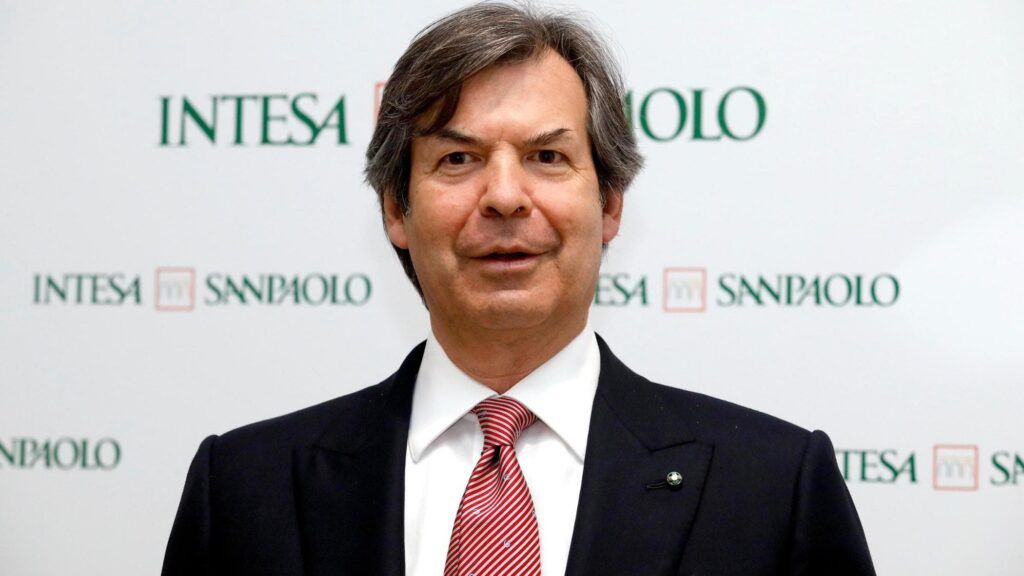
There is a thread that unites the second level contract signed by Intesa Sanpaolo with the unions on Christmas Eve and the agreement to bring forward around 450 redundancies at a national level on a voluntary basis (around 9% in Piedmont) from June 2026 to next January 31st. It is the appointment that CEO Carlo Messina has with the markets and the business community next Monday 2 February, when he will present the 2026-2029 Business Plan (the day before, Sunday, the Board of Directors will also be convened for the approval of the 2025 accounts). It will be a strategic three-year period for the consolidation of the bank and its future governance, given that both he and the president will expire in spring 2028 Gian Maria Gros-Pietro.
Strengthened by the good industrial relations that characterize the history of the credit institution, Messina decided to accelerate on personnel aspects, “one of the Group’s strong points”. The exoduses, first of all. They are part of the agreement that was signed on 23 October 2024 after two months of negotiations on digital transformation. It envisages the exit of four thousand people (the total number of employees in Italy is around 72 thousand) on a voluntary basis between 2025 and 2027. The generational turnover has been set at 3,500 permanent hires, of which two thousand full-time and 1,500 part-time for the network.
An agreement was signed on 10 December which integrates what has already been agreed, with a new and additional exit window of 31 January (28 February for part-time workers). “There is no cost to the taxpayer,” he explains Roberto Marrasdeputy coordinator in Intesa Sanpaolo of Fabi, the Autonomous Federation of Italian Banks, a non-partisan and non-denominational organisation. «The sector – he adds – has its own Solidarity Fund. Given the new retirements, hiring is confirmed with the same ratio established by the 2024 agreement, i.e. for every hundred people, or relative proportion, 50 full-time and 37.5 part-time hires by March 2027. Therefore, the replacement percentage is in the order of 87.5%”.
Intesa Sanpaolo, when asked, prefers not to respond on these issues and does not provide numbers other than those contained in the official press releases. But the scenario is clear. In Piedmont the Group’s employees number around 8,200, concentrated above all in Turin and the Moncalieri hub. The integration of the agreement on voluntary exodus (a little less than 45 people between January and February in our region) contains important additions: «A commitment has been included – it is Marras again who speaks – for the additional hiring, up to 2%, of women included in protection courses because they are victims of gender violence. Furthermore, the Group has signed a commitment to reach 1,500 hires, out of the 3,500 envisaged by the 2024 protocol, by March 31st, the date on which the parties will meet again to monitor the progress of the situation”.
Human resources, not just now, are a fundamental asset for Intesa Sanpaolo. It has 421 billion jobs and over 1.400 billion euros of financial assets for customers. Largest banking group in Italy, international presence and European leader in wealth management, a net profit in the first nine months of 2025 at 7.6 billion euros (+5.9% on the same period in 2024), it has no risky operations in sight so growth will have to be endogenous and efficient. Hence, the course points to more young people, digitalization and integration of technologies with artificial intelligence to consolidate the leading position.
Thus, in addition to the remodeling of the agreement on voluntary redundancies, the renewal of the second level contract signed on the night between 23 and 24 December is an essential move. It will be in force from 1 January 2026 to 31 December 2029. It provides, among other things, an integrated welfare system, with implementation of the availability of the Time Bank, paid leave for oncology screenings and preventive medical visits, supplementary social security (increase to 4.5% of the employer’s contribution and to 6% for those under 35), meal bonus gradually increasing to 10 euros. «We spent the night, but it was useful», comments Marras satisfied, at the table together with the other unions. There are many interventions to support parenting and young families with a birth bonus of 1,200 euros and the “very short week”. In practice, those who have children up to three years of age will be able to choose between a spread of hours over four 7.5-hour days, for a total of 30 hours per week with equal pay, or 12 hours per week of paid leave. «We will conclude this journey after the presentation of the new Business Plan, when we will address other fundamental issues such as professional paths, commercial policies and corporate climate, mobility – intervenes Paolo Citterio, Fabi coordinator in Intesa Sanpaolo -. We prepared for this important event thanks to the active contribution of colleagues carried out through a questionnaire in which more than seven thousand people participated”.