Of
Viviana Mazza, correspondent from New York
Milanese, degree in History of Modern Art: «I found my path after a year of law school». «A hereditary passion: at home we had a lot of paintings from our great-grandfather, who collected everything»
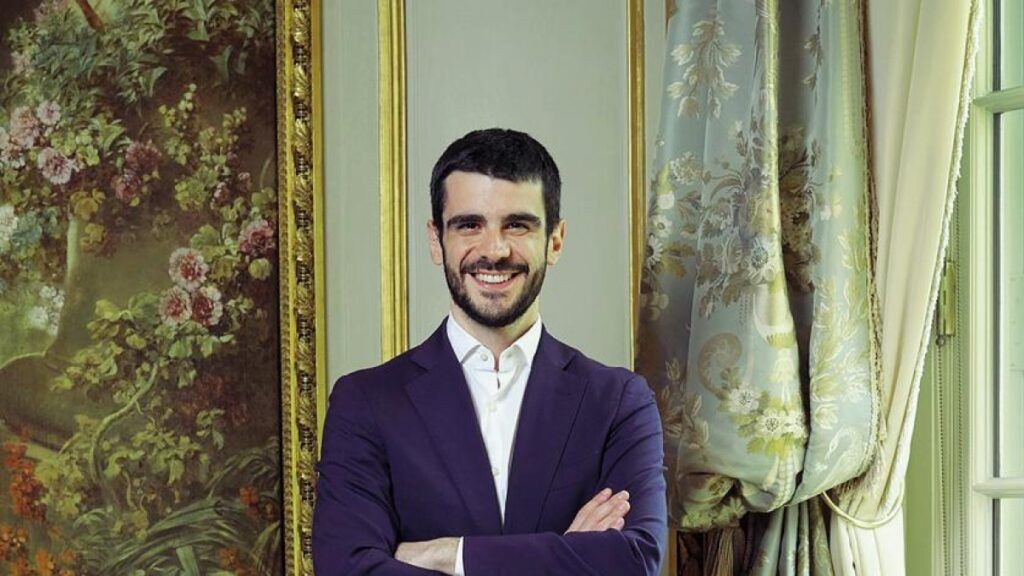
Giulio Dalvitthirty-four year old Italian, is the associate curator of one of the most famous museums in the world, the Frick Collection di Manhattanin the house of steel magnate Henry Clay Frick, a collection that includes masterpieces such as Giovanni Bellini’s «St. Francis in the Desert». After overseeing the transfer of the collection to Frick Madison in the Breuer Building (formerly the Whitney Museum) with two colleagues, he recently co-curated the display of the Frick Collection, which reopened last year after five years of restoration. «A unique double opportunity in the first five years of my museum career». The “new” Frick opened to the public the family rooms on the first floor, which for 90 years, since the museum was created in 1935, had been used for offices.
You graduated in History of Modern Art at the University of Milan, and moved to London at the age of 21, where you studied and taught art history at the Courtauld Institute. He had not worked steadily in a museum before. How did he get here?
«I started in March 2020, in the midst of Covid. I had already signed the contract but for almost two years I literally had no place to have the interview: consulates and embassies were closed, they kept postponing. It’s true: mine had been primarily an academic career, despite having worked with some museums before. Here in New York, however, there is a culture that aims to invest in young people, supporting them as they approach the profession. The path is long: being a curator means very different things depending on the different institutions, doing it at Frick is different than at the Met or in Italy, simply because each museum has its own needs, cultures and ecosystems. One of the big differences between Italy and the United States is the opportunities for young people. In Italy, access to the profession of curator practically does not exist. While here, even as soon as you finish university, you can be hired in a museum, in the first years you work alongside more senior figures, then you grow, you find your own path and one day you can become the director of a museum.”
During the pandemic, when the Frick closed for renovations, you curators held “Cocktails with the Curator”: a global success, with millions of views, which became a book.
«So I was in London and then in Italy, I had to drink these cocktails at 10 in the morning… But it was fun and it was a way to make the museum’s collection known throughout the world. And to feel the collection close even when we were far away and it was not possible to bring people into the closed museums. There are still people who write to us, the other day a nurse from Guantanamo: “I survived Covid because on Friday I knew that I had this space for myself despite the madness of the circumstances in which I lived””.
How did your passion for art begin?
«First I did a year of law school and I realized that it wasn’t my path. Then I thought of studying only contemporary art: at home we had many paintings by my great-grandfather, who collected everything and more. He had founded Eco della Stampa and had the intuition that artists needed press reviews, but couldn’t always afford them, so he charged them however they wanted, including for their art. He had thus accumulated a collection, mostly of scabs to be honest, although it later turned out that some pieces were quite important. They intrigued me, they were like questions that needed answers, and so I started to become interested in the world of twentieth-century art. But if you want to study contemporary art you still need to know the art of the past. And I gradually moved on to ancient art. I left Italy quite early but I always felt it was a value to have the perspective of a person born and raised in Italy.”
Is the history of art made abroad different from that in Italy?
«The history of art made in Italy is very much based on a history of style, also from the methodological point of view of the questions, which have not changed too much in the last 40-50 years. The history of Anglo-Saxon art has also somewhat changed the questions to be asked of these objects from the past. Who is looking and how much this changes the object you are seeing is a question that somewhat obsesses the Anglo-Saxon world. I have always tried to put together these two ways of doing art history.”
One of his books on a Sienese artist from the 1400s, Vecchietta, has just been published. Why did you write about him?
«He’s a character that no one knows, but in my opinion he’s a very cool artist. And I tried to integrate two ways of doing art history that don’t always talk to each other: not only do I look at his works as they are linked to the Sienese tradition of those years but I also try to think about what it means to write an artist’s monograph, what the prejudices are. When you tell a story you create a container in which to insert things: what interpretative violence do we commit by folding the materials to make them fit within chronologies and categories? To understand Vecchietta, in my opinion, we need to forget the history of art as we know it. He defends a universal idea of the artist who can work in different media, and he does so 500 years before the modern avant-garde and before it was allowed: in 1400 the guilds were rigid, if you were in the art of painters you were a painter, if you were in the art of stone you were a sculptor. But he joined several corporations, and signed himself as a painter on sculptures and as a sculptor on paintings, subverting institutional categories. Then he began to always sign himself Vecchietta, surprisingly anticipating the twentieth-century idea of what it means to make art. If I hadn’t had a background and a strong interest in contemporary art, perhaps I wouldn’t have seen these things in his work, I wouldn’t have had this key to interpreting it.”
Next year at the Frick you will have an exhibition on Sienese bronzes from the 1400s.
«Vecchietta works some of the most beautiful bronzes of the fifteenth century. And this idea of remembering forgotten artists is something that we do a lot at Frick: fifteenth-century Sienese sculpture is a subject on which there has never been an exhibition even in Italy and we, a little absurdly perhaps, are doing it in New York.”
You mainly deal with Italian and European art. What does it mean for you to do it from New York?
«It’s strange for me to be so far away from objects. It is useful and very nice to be close to the works in their contexts. Bringing them to the United States is always a somewhat violent operation. It’s also the best way to get to know them but then they have to go home. It’s like being ambassadors. The French pour immense resources into promoting their culture abroad and in my opinion it is fundamental. Traditionally there is a love for Italian art in the United States and we have focused on having others come to us. But in a world that has become bigger, this movement is neither necessary nor taken for granted, beyond the big names. The Italian artistic heritage is a widespread network: we need to talk about it, put resources into it, have patience and not see it only in terms of marketing a product, but of knowledge of a reality that can arouse curiosity and support even from the United States. Many restorations in Italy were supported by American funds. There was a generation of Americans who grew up with a strong cultural education that led them towards Italy and Europe. If we want it to continue, it’s up to us.”
December 28, 2025
© ALL RIGHTS RESERVED