
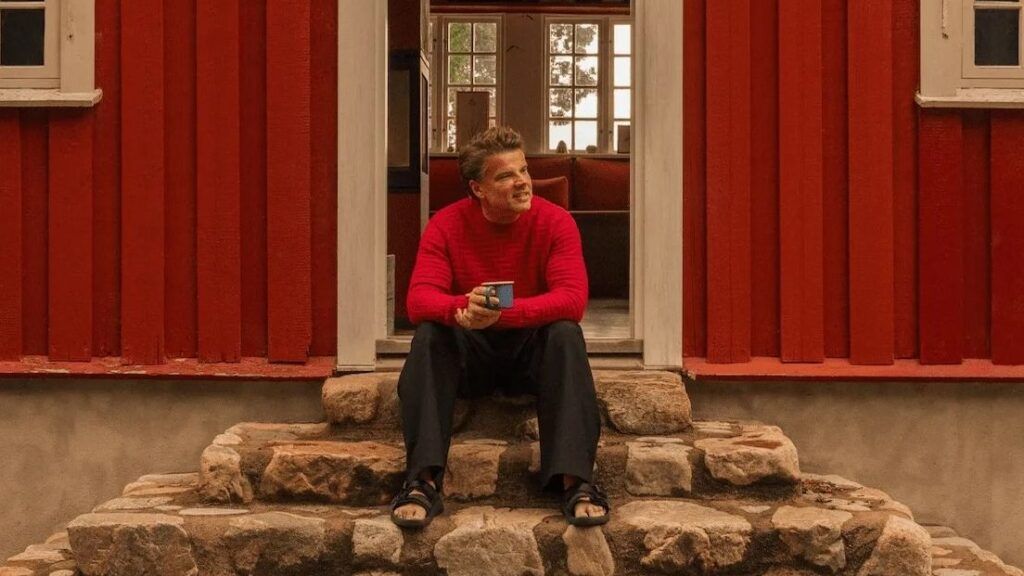
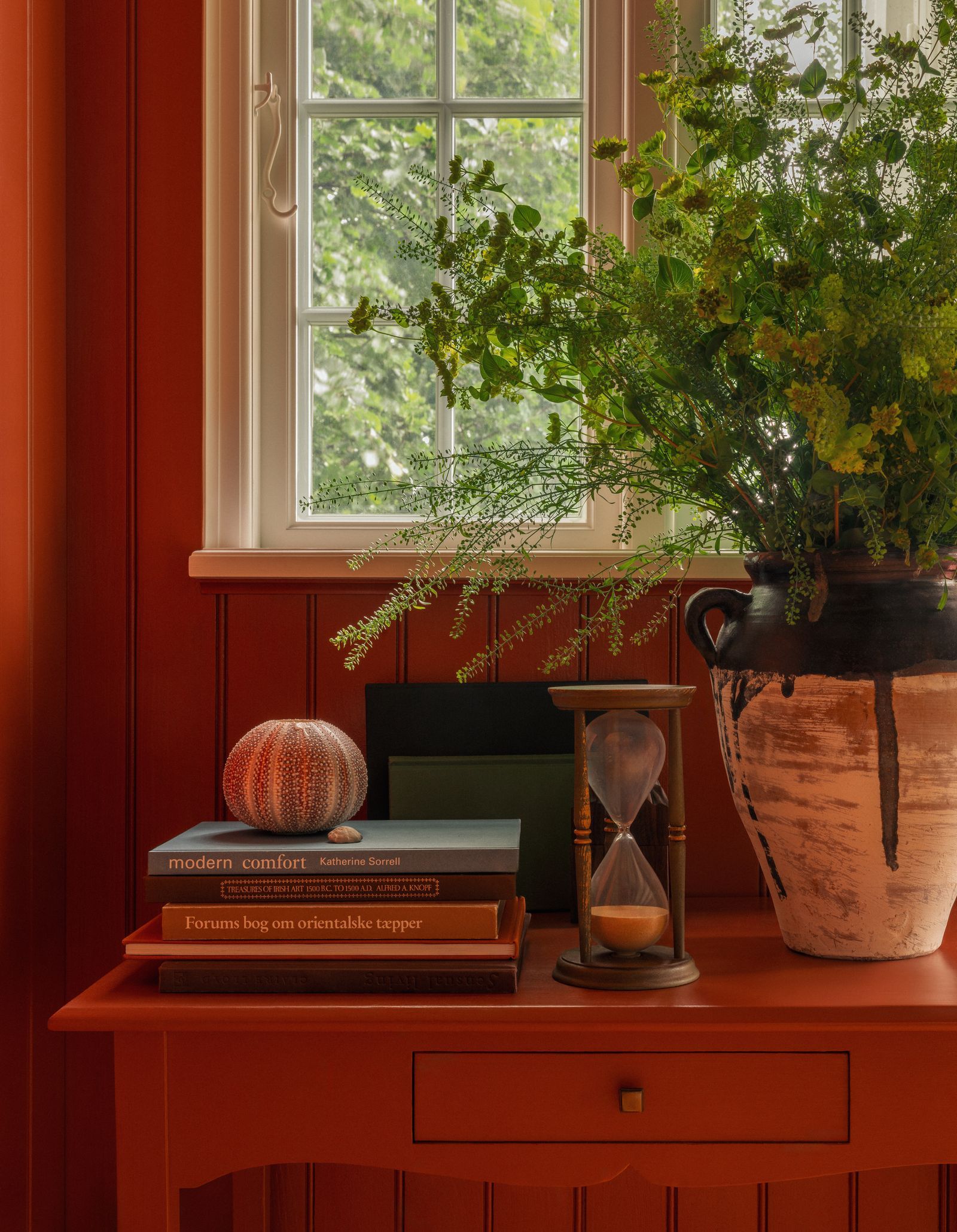
This is a family bond with the place where it all began for the architect. “I was good at drawing, so I wanted to become a cartoonist, create graphic novels,” he explains. But since there were no comics schools in Copenhagen, Bjarke ended up enrolling at the Royal Danish Academy, where he studied architecture. “The first two years of school were very focused on drawing, so I thought I would probably spend a few years improving my skills at drawing backgrounds, such as buildings and landscapes,” he recalls.
A corner of the master bedroom (formerly a balcony) where Ingels can draw and enjoy the view. The beam lights are from Byggfabriken and the table lamp is from Trizo21. Both the integrated shelving and the integrated desk are custom-made pieces by Beier Davidsen.
© Christian Møller Andersen | Styling: Rikke Jung Larsen
The house, which Ingels describes as a “big, warm hug”, is a sanctuary for the architect: a place to regenerate and find inspiration.
© Christian Møller Andersen | Styling: Rikke Jung Larsen
Ingels began his career at the prestigious international architecture firm OMAbefore co-founding PLOT in 2001. Four years later, at just 31 years old, he founded the Bjarke Ingels Group (BIG)the project that would cement his reputation as one of the most influential architects in the world. Over the past two decades, BIG has designed a number of iconic projects, from Billund’s LEGO House to New York’s VIA 57 West. Each reflects the studio’s singular, unconventional approach: fusing contemporary, high-tech elements with a playful spirit and an unwavering commitment to the health of the planet. Terms such as “hedonistic sustainability” and “pragmatic utopianism” are often associated with Ingels’ work. “I love oxymorons… You know, a power plant that’s also a park or a ski slope, a museum that’s also a bridge,” he says. “It’s almost as if each project has this internal contradiction, but it merges into a new hybrid.”
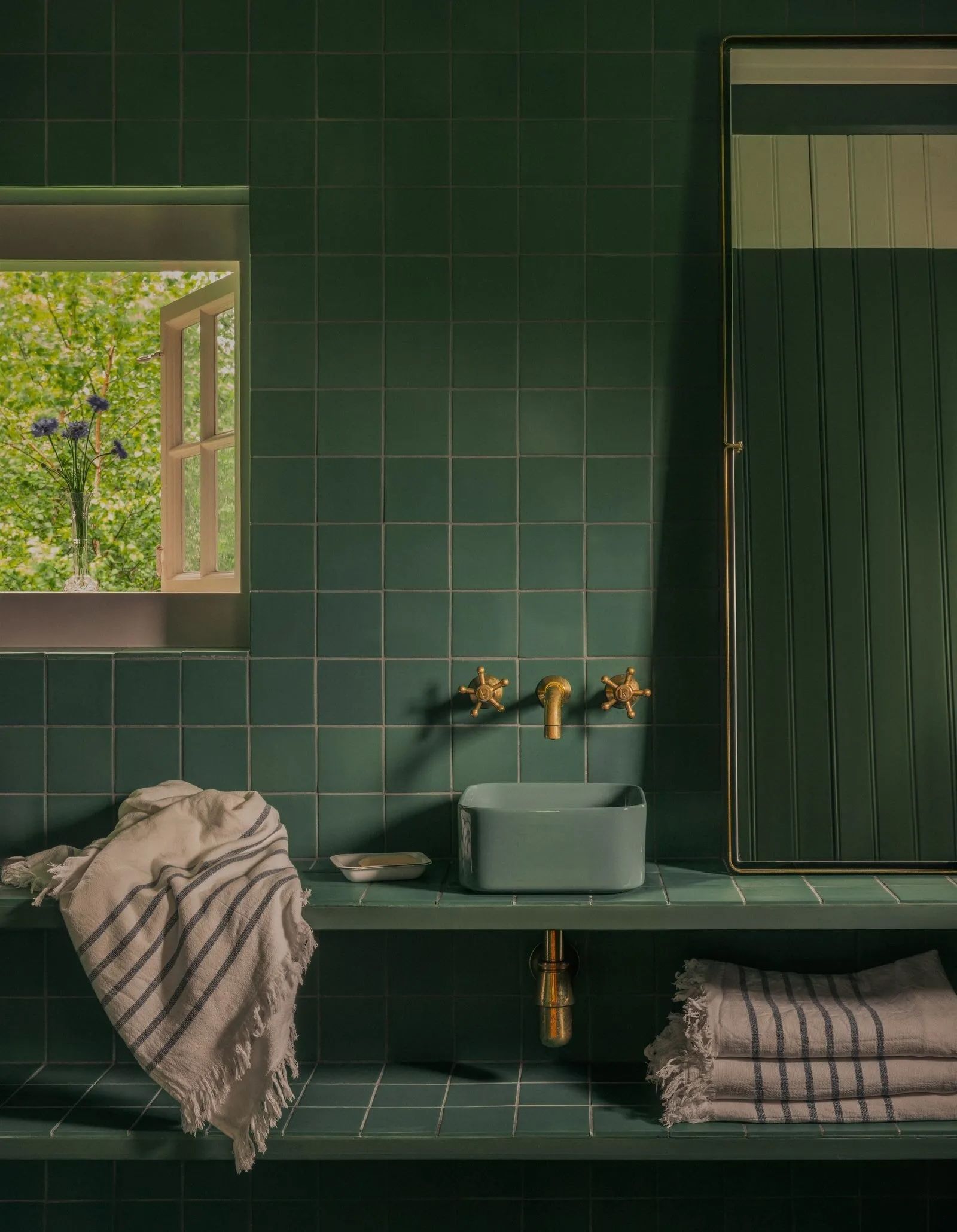
Every corner of the house, including the bathroom, is designed with a “very simple, very Scandinavian” aesthetic. The tiles are Made a Mano and the sink is by Ceramica Cielo. Both the faucet and the mirror are by Toni Copenhagen.
© Christian Møller Andersen | Styling: Rikke Jung Larsen
A source of inspiration for his work
And, definitive, for Ingels, “architecture is actually about performanceHe maintains a philosophical perspective on his work: “Designing something means giving shape to what has not yet been formed, in other words, shape the future,” he reflects. Just as graphic novels create alternative worlds, he points out: “Architecture is the art and science of turning fiction into reality.”