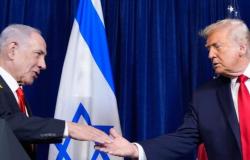
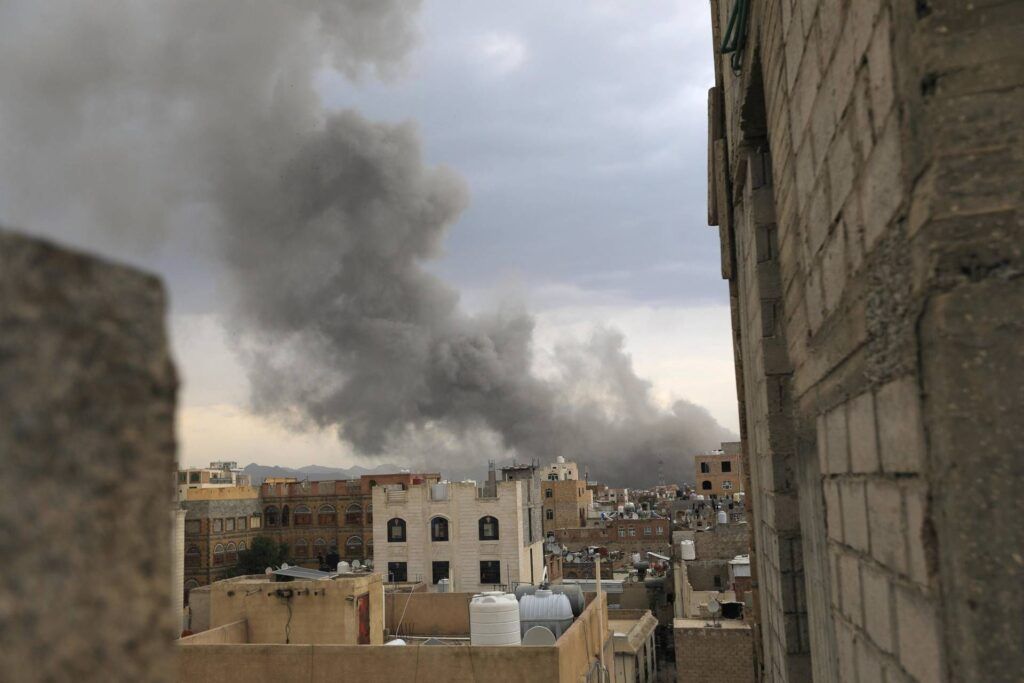
Saudi Arabia and the United Arab Emirates between tensions and competition. A new dossier risks opening up for Donald Trump: internal crisis and regional dynamics are turning the spotlight back on Yemenas the world comes to terms with Benjamin Netanyahu’s latest step, after that Israel announced the recognition of Somaliland as an “independent and sovereign state”. A move which for analysts is clearly based on strategic reasons dictated by the need for allies in the area, also with an anti-Houthi function.
In a Yemen that has been ‘prisoner’ of internal and regional tensions for years, the scene of one serious humanitarian crisis, split by a civil war with the Houthiswhich Iran has long been accused of supporting, this morning the head of the Yemeni Presidential Council, Rashad al-Alimi, believed to be close to Riyadh, declared state of emergency, for 90 days. He ordered the closure of ports and borders for 72 hours. And he announced, the Yemeni agency Saba reported, the end of the defense pact with the Emirates amid the escalation of tensions in the south of the country.
The two fronts and the role of the Saudis
Recently More and more tensions have been increasing between the Saudi-backed government ‘front’ and the Southern Transitional Councilsecessionists believed to be supported by the Emirates. In recent hours, the Saudi-led Coalition announced that it had carried out a “limited military operation” in the port of Mukalla, in southern Yemen, the capital of the Hadramaut governorate, after a warning to the Southern Transitional Council against military actions in the area that borders the Gulf monarchy and which was conquered in recent days. According to the Coalition, they entered the port of Mukalla last Saturday and Sunday two boats, accused of transporting weapons and equipment “to support” the Transitional Council of the south, which aims to form a separate state from the north-west of Yemen, in the hands of the Houthis since 2014. It is the second operation of which we have news in a few days. According to Saudi sources, highlights the Wall Street Journal, the two boats loaded with weapons and vehicles had left the Emirate port of Fujairah, with the tracking systems turned off.
This morning the Saudi Foreign Ministry, denouncing threats to the national security of the kingdom and to the security and stability of Yemen and the region, “underlined theIt is important that the United Arab Emirates accept the request of the Republic of Yemen for all their forces to leave the territory Yemeni “within 24 hours and end any form of military or financial support to any party in Yemen.” It is not clear, CNN highlights, which Emirati forces are present in Yemen. Saudi Defense Minister Khalid bin Salman published a statement on Saturday on
Concern over the latest developments in south-eastern Yemen it was expressed over the weekend by the US Secretary of State, Marco Rubiowith the urge for “moderation” and “diplomacy” for a “lasting solution”. Rubio reiterated gratitude for the “diplomatic leadership of our partners, Saudi Arabia and the United Arab Emirates”, and the favorable position regarding “all efforts to advance our shared security interests”.
New dossier for Trump?
Maybe a new dossier for Trump because they have become relations between Saudi Arabia, home of Sunnism, and the Emirates are increasingly complextwo partner countries of the United States that were united until a few years ago in the name of the Saudi-led coalition put together to counter the Houthis, Shiites, who took control of the capital Sana’a in 2014. Conflicting objectives between Riyadh and Abu Dhabi. THE Saudis support a united Yemenalthough in reality, with the Houthis firmly maintaining control of the northwest and Sana’a, Riyadh has mainly focused – summarizes the WSJ – on the management of internal conflicts between the Yemeni factions and on the control of the border areas by proxies. Now, however, observers note, the Southern Transitional Council controls a large part of southern Yemen.
Mukalla is almost 500 kilometers northeast of Aden, the ‘capital’ for anti-Houthi forces in Yemen since the Houthis took Sana’a more than 11 years ago. The Houthis themselves have threatened to attack a possible Israeli presence in Somaliland, which is located in a strategic position on the Gulf of Aden.
In recent months Israel struck targets in Yemen in response to Houthi attacks who claimed to be acting in support of the Palestinians in the Gaza Strip battered by Israeli military operations against Hamas and other groups, launched after the attack in Israel on 7 October 2023. And Israel “needs allies in the Red Sea region for many strategic reasons, among these the possibility of a future military campaign against the Houthis”, explained last month the Institute for National Security Studies, an Israeli think tank, as relaunched by the BBC. So the “Somaliland is an ideal candidate for such cooperation because it can offer Israel potential access to an operational area close to the conflict zone.”
Israel is first and foremost trying to contain Iranian influence in the Red Sea regionis the analysis of Cameron Hudson, an expert analyst on Africa interviewed by the British network. “The Red Sea is also a transit route for weapons and fighters – he observes – It has always been a source of support and supplies for fighters in Gaza. So, having a presence, a security presence, an intelligence presence is useful for Israeli security interests.”