On December 27, the investigation into alleged financing of Hamas marked a key step. The operation conducted by Digos and Guardia di Finanza, on the initiative of the Genoa District Anti-Mafia and Anti-Terrorism Directorate and with the coordination of the National Anti-Mafia and Anti-Terrorism Directorate, led to the arrest of Mohammed Hannoun and other suspects. At the center of the investigation is a network of associations and fundraising channels active between Italy and abroad. The investigations speak of approximately seven million euros moved, real measures for over eight million and cash seizures for approximately one million and eighty thousand euros, including five hundred and sixty thousand euros hidden in a garage in Sassuolo.
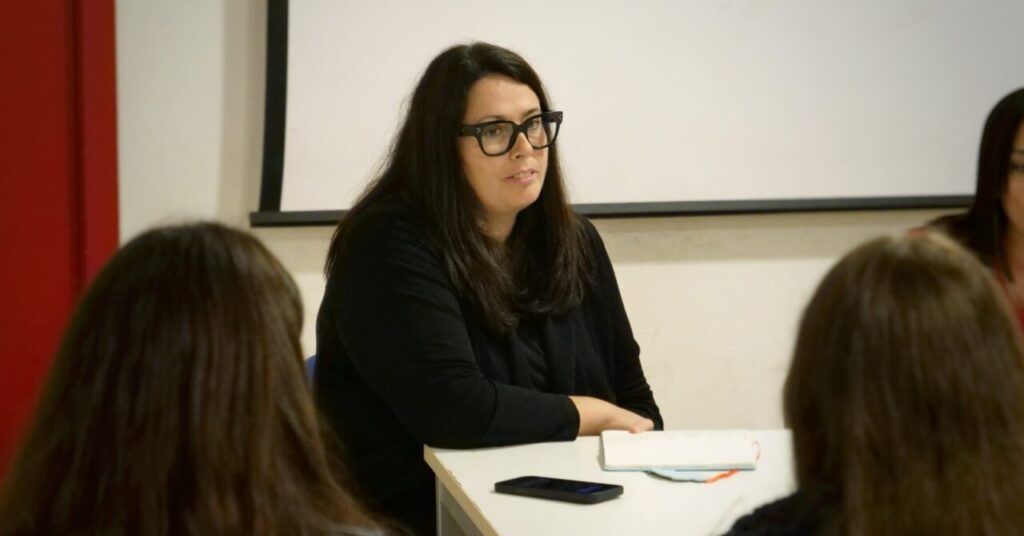
This is not an occult circuit. The system that the investigators are investigating has operated for years in a public way, through political initiatives, missions abroad and fundraising. In this context, one of the most recognizable faces next to Mohammed Hannoun is Stefania Ascari, deputy of the 5 Star Movement and member of the Parliamentary Anti-Mafia Commission. His presence was neither marginal nor episodic. Ascari participated in initiatives promoted by the associative network attributable to Hannoun, sharing activities and missions with Alessandro Di Battista.
There are videos and materials that portray her in northern Syria with the Charitable Association of Solidarity with the Palestinian People, chaired by Hannoun. In those contexts Ascari intervenes publicly, talks about the association’s activities and asks for donations, inviting people to contribute financially to the initiatives presented as humanitarian. Similar presences are also documented in Lebanon and southern Turkey. A continuity that has contributed to giving visibility and political legitimacy to that association system which is currently under judicial investigation.
Ascari sits on the Parliamentary Anti-Mafia Commission, a bicameral investigative body with extensive cognitive powers and called upon to operate on complex phenomena, financial flows and criminal networks. The investigation into Hannoun is not formally a mafia investigation, but is followed by the National Anti-Mafia and Anti-Terrorism Directorate. It is an element that poses a problem of institutional opportunity when a member of the Commission has had such direct political exposure alongside a perimeter currently under investigation.
The investigation resulted in arrests, seizures and the discovery of large quantities of cash. At the same time, a member of the Parliamentary Anti-Mafia Commission offered visibility, a public role and political legitimacy to a network currently under judicial investigation, also through participation in fundraising initiatives. In the background, a narrative has established itself that tends to delegitimize the work of the police and the judiciary, describing them as political instruments or as an external caricature, even as they investigate financial flows and security.
But after all this, can Stefania Ascari still sit on the Parliamentary Anti-Mafia Commission? Wouldn’t it instead be appropriate to take a step backwards, to protect the work of the Commission and of the deputy herself, and for the 5 Star Movement to adopt a line of rigor consistent with that which it has claimed and demanded in the past in judicial cases that are also very different from this one?