
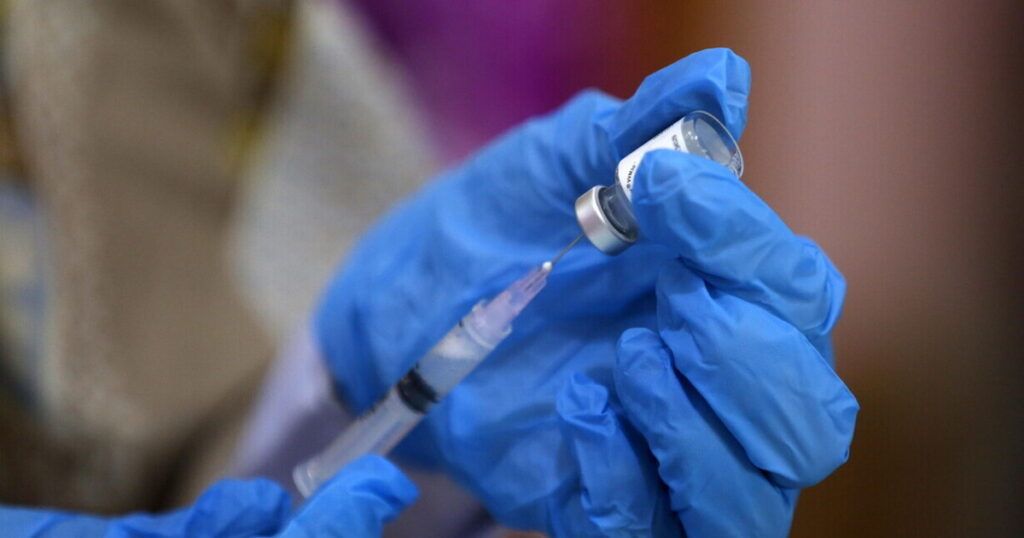
The Danish research group’s project involves the enrollment of thousands of newborns who will be administered the vaccine at two different times. But this is a deliberate exposure to avoidable risks to produce data that does not meet a real scientific need
A US publicly funded clinical trial is being conducted in Guinea-Bissau involving vaccination against hepatitis B in children in the very first hours and days of life. The project involves the enrollment of thousands of newborns who will be assigned to distinct groups based on the time of administration of the vaccine: one part will receive the dose at birth, while another part will receive it only after a few weeks, following a practice that has long been recognized as less effective in preventing the transmission of the virus from mother to child. The children will then be followed for years to evaluate general health outcomes, such as overall mortality, serious illnesses and developmental indicators. The funding, equal to approximately 1.6 million dollars, was awarded directly, without a competitive tender, to a Danish research group already operating in the country.
For a reader who approaches this story without prior knowledge, it is necessary to first clarify what hepatitis B is and why vaccination at birth represents one of the pillars of public health. Hepatitis B is a viral disease that affects the liver and which, when contracted in the first days of life, evolves into chronic infection in a very high percentage of cases. This chronicity exposes the individual, throughout his life, to an increased risk of liver cirrhosis and hepatocellular carcinoma. Precisely to interrupt this mechanism, well documented by decades of epidemiological and clinical studies, vaccination at birth was introduced and recommended at an international level, especially in countries where the virus is endemic. The safety of the vaccine, its effectiveness and the importance of early timing of administration are not the subject of active scientific debate, but consolidated results on which global vaccination policies are based.
Within this framework, the design of the study appears ethically very serious. Making vaccination delay an experimental variable means consciously accepting that a portion of newborns face a higher probability of contracting a preventable chronic infection. This risk is not theoretical, it is not uncertain, it is not a possible unpredictable side effect: it is a risk known, quantified and widely described in the scientific literature. On an individual scale it may seem abstract, but on the scale of thousands of children it inevitably translates into a concrete number of avoidable infections, chronic diseases and, in the long term, deaths that could have been prevented with timely vaccination. The expected damage thus becomes a consequence foreseen and incorporated into the study design itself.
The scientific futility of the project makes this human cost even more unacceptable. The study was not created to verify whether the hepatitis B vaccine works or whether it is safe, because these aspects are already supported by a mass of data that makes any further confirmation marginal. The real objective is to look for or emphasize alleged side effects or “non-specific” effects of vaccination, shifting attention from a certain and immediate benefit towards vague hypotheses, difficult to interpret and easily exploited. Whatever new data is produced will still be obtained at the expense of late vaccinated children, i.e. a group for which we already know that the biological risk is higher. The relationship between imposed risk and expected cognitive value is therefore radically unbalanced.
This design directly violates the fundamental principles of medical research ethics. It does not minimize the risk when there is an effective and safe intervention. It offers no direct benefit to those involved. It does not distribute risks and benefits equitably, because the risks fall on a vulnerable population while any cognitive benefits, if they ever emerge, will be used elsewhere. Informed consent, in this context, is only formal: newborns cannot decide and parents are asked to sign in a context of strong information asymmetry and structural dependence on the local healthcare system, in a country with limited resources, where refusing a study financed from abroad is not a neutral choice. The choice of Guinea-Bissau is not random. It is a highly endemic country, with a fragile health system and fewer institutional protection tools. This makes a plan feasible that would hardly have been approved in high-income countries, where the intentional delay of effective vaccine protection in newborns would have faced immediate ethical and legal obstacles. In this way, a structural inequality is transformed into a favorable operational condition.
To this already very serious ethical substance are added significant procedural criticalities. The funding was awarded without a competitive tender, excluding any open comparison between alternative proposals and any prior discussion on the need for the study itself. A transparent trial would inevitably have raised questions about the proportionality of the risk, the absence of a real scientific gap and the appropriateness of conducting such a trial in a vulnerable population. The ethical approval pathway is also weakened, with the absence of rigorous internal review by US facilities that normally evaluate publicly funded studies, especially when involving minors. Delegating the evaluation to local ethics committees, in a context of strong dependence on external funding, does not compensate for this gap, but amplifies it.
A further extremely critical element concerns the Danish research group to which the study was entrusted. This group has been known for years to have produced highly controversial studies on the “nonspecific” effects of vaccines, particularly in West Africa, often characterized by weak observational designs, flimsy statistical analyses, and conclusions that have not been replicated in other contexts. These works have been repeatedly criticized by epidemiologists and biostatisticians for problems with confounding factors, data selection, post-hoc changes in endpoints, and interpretations that far exceed what the data allow. Despite this, the same researchers continue to be involved in projects that explicitly aim to call into question consolidated vaccination practices, creating a closed loop in which initial hypotheses are re-proposed without adequate independent scrutiny.
Entrusting a group with this infamous track record with a trial that deliberately introduces an increase in risk in newborns means handing over the management of an already ethically problematic design to researchers who have demonstrated in the past a tendency to interpret data in a oriented way, especially when it comes to suggesting adverse effects or imbalances associated with vaccinations. This reinforces the impression that the study is not designed to clarify a real uncertainty, but to produce results that serve an already constructed narrative. This framework fits coherently into the political context that made the project possible. The influence exerted by Robert F. Kennedy Jr. on US health policies favored an instrumental use of research as a means of artificially reopening questions already resolved on a scientific level, with the aim of discouraging vaccination through the continuous search for presumed risks. The aim is transparent: the available data is already sufficient to support the safety and effectiveness of the vaccine and the importance of administration at birth; what is sought now is not necessary knowledge, but material that can be used to fuel doubts.
The heart of the matter remains the deliberate exposure of children to avoidable risks, at a stage of life where the consequences are profound and long-lasting, to produce data that does not meet a real scientific need. Out of thousands of newborns, this means accepting in advance a predictable number of illnesses and avoidable deaths as the operational cost of a political agenda. It is at this point, more than in any formal irregularity, that this study takes on the contours of a plan that betrays the very function of science, transforming it from an instrument of protection of the most vulnerable into a means of legitimizing an announced plan.