Five ways to meet an interpreter who knew how to laugh at power, desires and our contradictions.
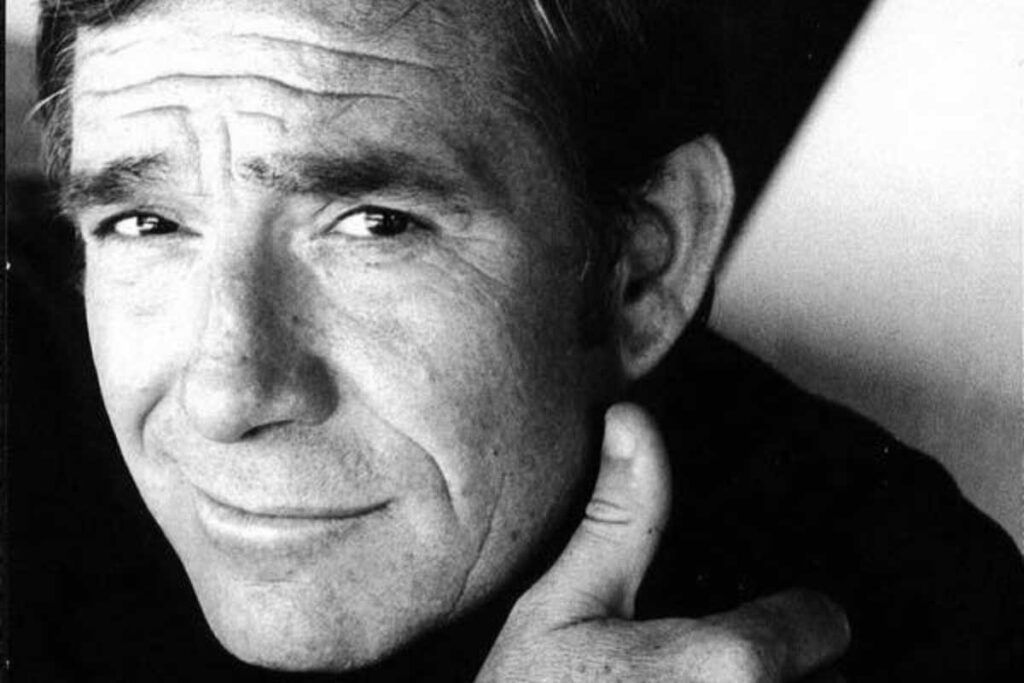
Ugo Tognazzi he needs no introduction: he was one of the most incisive actors in Italian cinema, an artist who through laughter he sent intense and impactful messages with at the center the clash between morality and instinct, between order and anarchy. In this sort of battlefield, very few have been able to move with such freedom like Ugo Tognazzi.
And it is rather simplistic to define it as “showman” given that Tognazzi was a magnifying glass who, with disarming naturalness, brought out the hypocrisies of a country in transformation. For this reason, rather than celebrating him, it is worth returning to his five key films. Films different in tone and poetics, but united by a common denominator: the idea that cinema can still disturb, entertain and make us think at the same time.
Five films, five opportunities to (re)discover a great Italian actor
The tragedy of a ridiculous man: It is considered the highest point of dramatic Tognazzi. Directed by Bernardo Bertolucci, the film entrusts the actor with a character overwhelmed by the conflict between personal pride and the collapse of a system of values. His provincial entrepreneur, rough and vulnerable, is a figure who absorbs the tensions of post-industrial Italy. Primo Spaggiari, a dairy industrialist of humble origins, sees his life turned upside down by the kidnapping of his son Giovanni, while his company is overwhelmed by a profound economic crisis. Convinced of having to pay a large ransom, he collects the money with the help of his wife Barbara, a cultured and refined woman, even when he discovers that his son may be dead.
The vice: Long before the topic of sexual identity entered pop culture, Tognazzi approached it with lightness, even if only apparent. Renato and Albin are a homosexual couple who for years have managed the famous drag queen club La Cage aux Folles in Saint-Tropez, where Albin is the star with the name “Zazà Napoli”. Their daily life is turned upside down when Laurent, Renato’s son, announces his marriage to Adrienne, daughter of an ultra-conservative politician. To gain the approval of his future in-laws, Laurent lied about the identity of his parents, presenting Renato as a respectable married diplomat.
The big binge: Here Tognazzi meets the radical vision of Marco Ferreri, giving life to one of the most controversial films in European cinema. His character, a chef and gourmet, transforms pleasure into obsession, food into a metaphor for self-destructive consumerism. Four men, dissatisfied with their lives, lock themselves in a villa on the outskirts of Paris with the idea of taking their own lives by eating themselves to death. Between extreme binges and surreal encounters, their project proceeds until, one after the other, they die in different ways: some trying to escape, some from bodily excesses, some from greed. The last to die is Philippe, in the arms of the teacher Andréa, while the villa remains a grotesque symbol of an existence devoted to excess and self-destruction.
The federal: One of the first great satirical shots on fascism made by post-war Italian cinema. In May 1944 the fascist soldier Primo Arcovazzi received the order to capture and bring the anti-fascist Erminio Bonafè back to Rome, in the hope of obtaining a promotion. During the journey the two are forced into an adventurous escape amid accidents, bombings and paradoxical encounters, which expose Arcovazzi’s naivety and contradictions. Once in Rome, now liberated by the Allies, the fascist risks lynching but is saved by Bonafè, who frees him and lets him go. Arcovazzi goes away alone and disillusioned, deprived of his ideological certainties, while the professor returns free among the partisans.
My friends: perhaps among the most famous of Ugo Tognazzi. This 1975 film by Mario Monicelli tells of five middle-aged Florentine friends, frustrated by unsatisfactory lives, who at a certain point decide to escape from their routine with “zingarate”: cruel and playful pranks against unsuspecting unfortunates. Between super jokes, increasingly extreme jokes and moments of melancholy, the group uses irony as a defense against the passing of time and personal failures, until a bitter epilogue marked by the sudden death of one of them, which however does not extinguish the mocking spirit of friendship.