
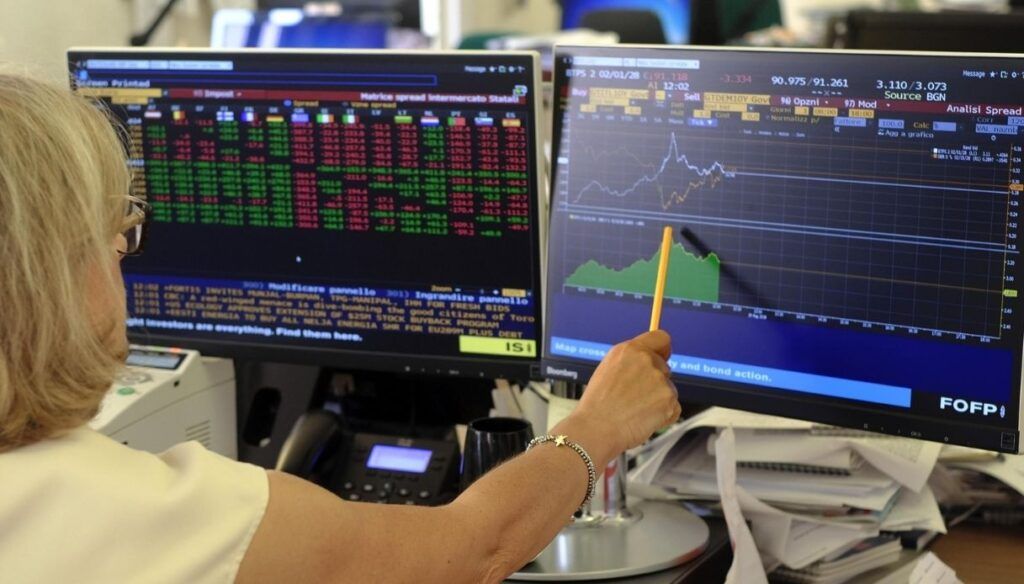
The spread between BTPs and Bunds opens slightly higher. The yield differential between ten-year Italian government bonds and German ones of the same duration has started trading at quota 70 basis pointstwo more than the previous closing at 68. At the same time, the yield on the 10-year BTP stood at around 3.60%, up compared to the 3.54% recorded before the Christmas holidays. These are values that confirm a phase of relative stability for the Italian government bond market, in a European context still marked by uncertainty.
Spreads and public accounts, why the decline is positive
The reduction of the spread has a direct impact on the cost of the public debt. A smaller differential means that the State is able to finance itself under more favorable conditions, paying lower interest on new bond issues. This mechanism is reflected in the medium term in lower interest expenditure, with positive effects on budget balances.
According to estimates from the Parliamentary Budget Office, a prolonged phase of limited spread could result in savings exceeding 17 billion euros over the next five years. Resources which, at least in theory, could be allocated to other expenditure items or to debt reduction.
Spread and yield, the difference
For savers, however, the spread is not the only parameter to consider. Who invests in bonds looks above all at the absolute return of the security, i.e. the coupon and the purchase price, rather than the comparison with other countries.
Over the last year i yields of ten-year BTPs showed significant fluctuations. It went from around 3.2% at the beginning of January to peaks close to 3.9% in the spring, thanks to the volatility linked to tensions on international markets, and then returned to levels around 3.4-3.6% in recent weeks.
Il decline in the spread does not automatically imply a decline in the yields of Italian securities. This happens because the spread measures the difference compared to the German Bund, whose yield, in the same period, increased significantly, going from around 2.1% to over 2.7%. If the spread had remained unchanged, BTPs would yield even more today.
What changes for those who invest in BTPs
A ten-year BTP that offers a yield of around 3,60% it represents, for many savings profiles, still an interesting level. Especially when compared with bank deposit rates, which in most cases remain lower, and with a stock market characterized by strong fluctuations.
From a risk perspective, the combination of tight spreads and relatively high returns creates a balance that many investors consider favorable. The coupon flow is predictable and regular, while the probability of strong shocks linked to debt tensions appears, at the moment, reduced compared to previous years.
There is also the possibility, for those who buy today and decide to resell in the future, to benefit from an aincrease in the price of the stock should yields fall further. This is an aspect to be evaluated especially for those who do not intend to take the BTP to maturity.
Is it worth investing in Italian government bonds today?
Convenience depends on the time horizon and objectives of the saver. For those looking for stability and a periodic income, medium-long term BTPs still offer superior returns to expected inflation and a risk profile considered manageable. In a context of gradually decreasing rates by the European Central Bank, locking a yield around 3.5-3.6% today may be interesting.
For those, however, who have a more short-term oriented approach, the risk of fluctuations price linked to interest rate trends and global macroeconomic conditions. In this sense, Italian government bonds continue to be an instrument to be included in a diversified strategy, rather than a single solution.