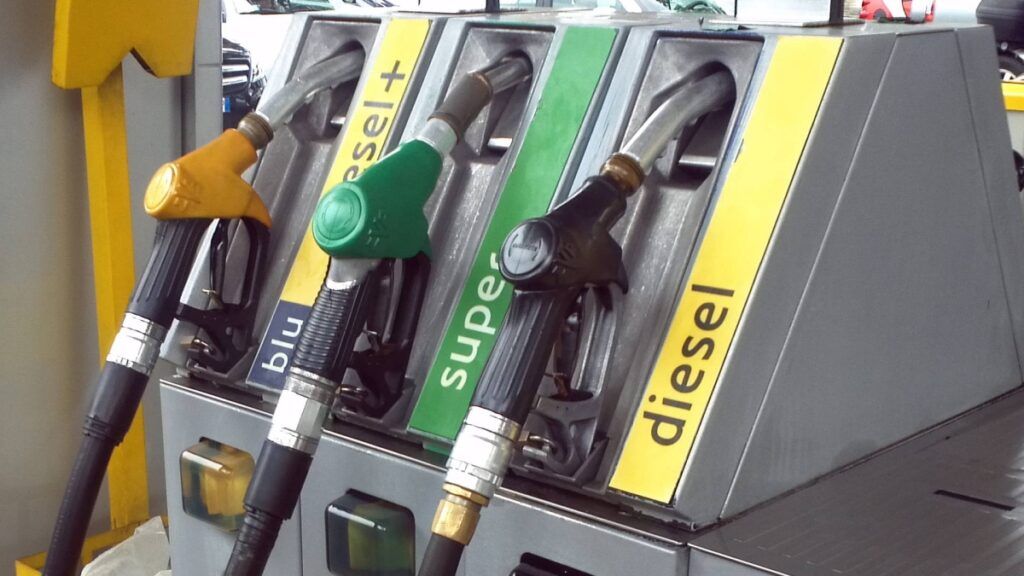
The changes on the excise duty contained in the Budget Law will produce, barring any surprises, a historic change at the distributor: diesel, even if by a few cents, should have a higher price than green fuel
The reason is not easy to explain but the fact is that in 2026 it could (easily) happen that in a fuel station, the price of diesel is higher than that of petrol. It happens that a rule on the remodulation of excise duties on fuel has been included in the new Budget Law. Which establishes that «starting from 1 January 2026, a reduction in the excise duty on petrol will be applied in the amount of 4.05 euro cents per liter and an increase, to the same extent, in the excise duty applied to diesel oil used as fuel”. Simply put, from New Year’s Eve the tax will be identical for the two fuels: 672.90 euros per thousand litres. This means that, unless choices (difficult to predict) are made by the oil supply chain, i.e. by producers and distributors on their respective profit margins, diesel will cost the public more than petrol.
A first estimate
The specialized monthly magazine Quattroruote has made an interesting estimate, taking as reference the latest price survey of the Ministry of Business and Made in Italy dated 8 December: 1.718 euros per liter of petrol and 1.684 euros per liter for diesel. Assuming that the price of the raw material (historically higher for diesel) does not change and that, in fact, the gross margin for the supply chain remains unchanged, petrol would drop to 1,669 euros per litre and diesel would rise to 1,733 euros per litresurpassing the “green” one above 6 cents a litre. Therefore, on the road, the cost of filling up a C-segment car with a 40-litre tank would decrease, on average, by 68.72 to 66.76 euros for those who run on petrol and would increase from 67.36 to 69.32 euros for those who drive on diesel. However, it is possible that, especially in the first weeks or months, the supply chain decides to intervene on margins, currently higher on diesel, to reduce the impact of this innovation on drivers’ wallets. This was indirectly made clear by the president of Unem, the former Petrolifera Union, Gianni Murano, revealing that from January 2026 the alignment of excise duties will make diesel more expensive than petrol by 3 cents. It must be said that the impact on the market will be notable both on vehicles in circulation (with a large presence of diesel cars) and on new ones: at the end of 2025, between pure diesel and plug-in cars, there will not be more than 150 thousand registrations.
December 29, 2025
© ALL RIGHTS RESERVED