Not just tax breaks and rain bonuses. The Budget Law currently being approved also contains an army of excise duties and taxes – in the form of increases or new introductions – which could weigh heavily on the consumer’s pockets both in the upcoming 2026 and in the next three years. Net of some escaped dangers, such as the plastic tax, here’s what will happen to the national wallet from January 1st.
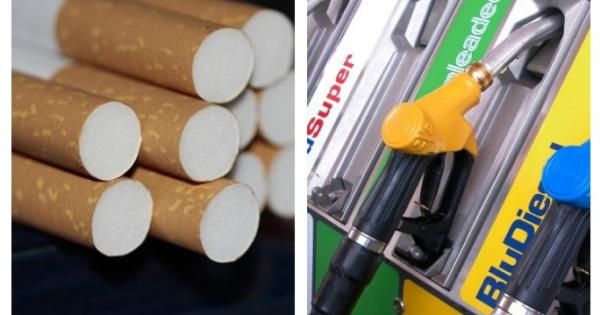
tobacco Very dark times for smokers. Although cyclopean increases have been averted (there was discussion of 2 euros per pack), almost the entire tobacco sector is affected by an increase in excise duties. For the noble motivation of discouraging the habit, of course, but also and above all to raise money by counting on the “uneconomic” behavior of cigarettes which continue to be consumed despite the increases. In fact, there is no escape anywhere: cigarettes, shredded tobacco, cigarillos. In particular, in the curious language of the Maneuver, the excise duties on cigarettes will jump from the current 25.50 euros per thousand pieces to 32 euros from 2026, 35.50 from 2027 and 38.50 from 2028. Put simply, around 60 cents in the three-year period. On average, a package that costs 5.30 euros today will reach 5.90-6 euros in 2028 with a final cost increase of around 18 euros per month and 216 euros per year. If you are thinking of investing in shredded tobacco, be careful because an increase of 50 cents will arrive as early as 2026, while the increase, however sustained, which will hit cigarillos is less than 25 cents. For heated tobacco, the growth in excise duties should be around 40% in the three-year period with an average growth of 12 cents per year.
shipments Among the most discussed (euphemism) innovations in Manovra is the new fixed tax of two euros on all shipments with a value of less than 150 euros coming from non-EU countries. It is no mystery that the tax is designed to target Asian e-commerce giants such as Temu, Ali Baba and Shein, well known to European consumers, especially the younger ones, who make low prices their trump card. The government expects to collect revenue of around 122 million in the first year. It should also be considered that, in parallel with the Italian initiative, the Council of the European Union has approved a tax of three euros on the same type of package starting from 1 July 2026.
fuels Also bad news for owners of a diesel car. In fact, a sort of pincer action is planned: on the one hand the reduction of excise duties on petrol by 4.05 euro cents per litre, on the other an increase, “to the same extent”, in the excise duty “applied to diesel used as fuel”. A sort of rebalancing that can be translated like this: a full tank of petrol will be less expensive, a full tank of diesel will be more expensive. The “bank”, i.e. the State, expects to collect around a billion, because the fleet of diesel vehicles, despite being slightly lower than the petrol ones, covers more mileage. Citizens, however, will be doubly affected. Not only does the supply of individual cars increase – estimates, as a rough guide, stand at an increase of over 100 euros per year – but, as a consequence, the prices of products traveling by road also risk increasing. However, diesel fuel used in agricultural work and in the production of motive power for industrial plants and laboratories is excluded from the increase.
finance All eyes are also on the Tobin Tax, the tax on financial transactions which takes its name from its creator, the Nobel Prize winner for economics James Tobin, who proposed it in 1972. Introduced in Italy by the Monti government starting from 2013, it is destined to double: the transfer of shares on unregulated markets goes from 0.2% to 0.4%, while the rate on the regulated market grows from 0.1% to 0.2%. At the same time, the tax on “high frequency trading” rises from 0.02% to 0.04%. Created to combat financial speculation, it risks having a concrete impact on small investors. Furthermore, there is also chiaroscuro news for cryptocurrency enthusiasts. In fact, the tax on capital gains realized starting from January 1st increases from 26% to 33%. However, the “electronic money tokens anchored to the euro” remain unchanged (i.e. taxed at 26%).
indirect increases Banks and insurance companies in the crosshairs. In fact, IRAP increases by two points for banks and also for insurance companies which will also suffer an increase to 12.5% in the rate on the car liability insurance policy for accidents to the driver. It is not excluded that these measures could have direct repercussions on citizens, despite the reassurances of the Government which promises to monitor. The impact, currently only hypothetical, is yet to be assessed.