
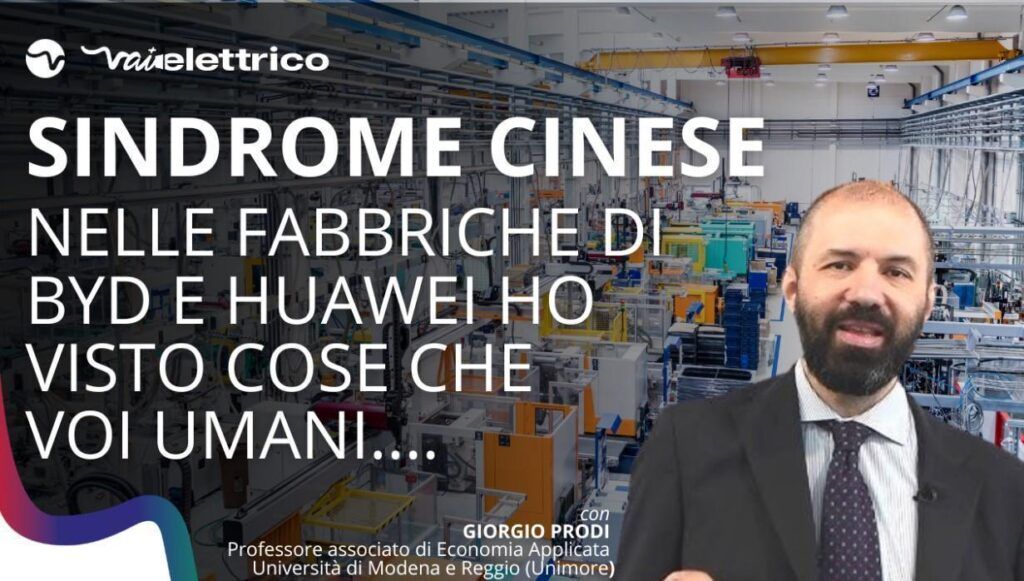

The economist Giorgio Prodi has just returned from China – where he also goes every year – and tells us he has seen «things you can’t even imagine». For example: Level 2 autonomous driving used routinely, 600 kW charging, companies like BYD and Huawei with armies of tens of thousands of engineers working on research and development. The competition between producers is crazy. So much so that the Beijing government has drafted a law to stem the price war. A sort of antitrust law in reverse, to prevent a bloodbath from occurring soon among the 129 Chinese car makers. In fact, a study by international consultant AlixPartners predicts that only 15 brands could survive in 2030.
From 2018 to today I have over 300 have already disappearedfailed or swallowed up by the big names. In short, the Chinese electric car sector may be expanding rapidly, but it is threatened by one fierce competition and from one profitability still fragile. Prodi also speaks of a «obvious excess production capacity» which will lead to the exit from the market of many small producers. The main Chinese automotive brands, however, are increasingly efficient and the industry as a whole seems one almost invincible battleship.
Many strings in the bow of Chinese car makers
He has one on his side endless internal markethe says, which guarantees the big «the economies of scale and volumes necessary to amortize the enormous investments in innovation and production efficiency». It is no coincidence that China alone installed this year half of all robots installed around the world.
Catl launches the world’s first industrial use of humanoid robots
Check «l’entire supply chain of the electric car», from motors to batteries, from electronics to software. It acts on the basis of a «well-defined strategy and decisions taken twenty years ago».
The sector has benefited in the past from generous public subsidiesnow almost zero. Enjoys a lower labor costs compared to Western competitors, but only for the lowest job levels, not for engineers and researchers. So “the challenge is much more complex of how it is told: it plays on innovation, research, technology. We are faced with very large and very efficient companies: let’s not delude ourselves that we can make up the gap in two or three years».
Duties and quotas will not save European cars
The duties on electric vehicles have not prevented Chinese manufacturers from gaining share of the European market by moving the accelerator to hybrids. The new negotiations underway for replace tariffs with import quotas and minimum prices (a scheme adopted in the 90s against the Japanese) risk «grant Chinese exporters guaranteed market niches with high profit margins».
The defense of the European automotive sector is therefore all uphill. «Brussels has set itself ambitious decarbonisation objectives without adopting the policies necessary to achieve them -concludes Prodi by following the premises of the Draghi Plan on European competitiveness -. It can and must do so now, but taking into account that half measures are no longer enough: a dramatic leap in size of resources for investments is needed».
The analysis of AlixPartners it does not reach very different conclusions, but highlights some elements of fragility in the Chinese industry; for example low profitability. Concluding that we will not witness aindiscriminate invasion of Europe, at least in the short term.

Income and sales under observation: only five make profits
In 2024 only five brands – BYD, Tesla, Li Auto, Seres and Huawei – have managed to generate profits in the electrical sector. Even well-known names like Nio e Xpeng they continue to burn capitaldespite showing signs of improvement.
The sales of electric and plug-in hybrid vehicles in China they continue to growrepresenting over half of registrations. But the increase in volumes is not enough to guarantee the economic sustainabilityespecially in a market characterized by a permanent price war.
Second Zhu Xicanprofessor of automotive engineering at Tongji University, manufacturers who do not exceed 2 million of vehicles sold per year they will hardly be able to survive in the long run. A very high bar, which automatically excludes dozens of smaller brands.
New rules from 2026: maximum consumption of 15.1 kWh/Km
A further element of challenge for Chinese manufacturers is the new standard mandatory national law that will regulate the energy consumption of exclusively electric passenger vehicles starting from 1 January 2026. The regulation is the first mandatory standard in the world for the energy consumption of electric vehicles with direct legal effect on newly produced models. It establishes binding electricity consumption thresholds, differentiated based on the unladen weight of the vehicle and the technical characteristics, but on average 11% lower compared to today. Cars with a weight of two tonsfor example, they will not be able to consume more than 15.1 kWh of electricity per 100 km. The autonomy should thus increase by approximately 7% with the same battery.
Some big names like BYD and Geely already boast models that meet this requirement, but many other manufacturers will have to make radical changes to their cars or withdraw them from the market. Also for this reason, comments Prodi, i price limits maximum on the domestic market (and minimum ones for exports to Europe) «they won’t stop the most innovative Chinese car manufacturers from assert itself over competitors»
READ also “The “flexible” 2035 of the EU car: a breath of fresh air, but in the short term” and watch the VIDEO






)