
The world of hardware is preparing for one of the most important events of the year, he CES 2026and ASUS has decided to turn on the engines with an announcement that promises to renew its offering for the desktop segment. Through a short but significant teaser video on YouTube, the Taiwanese manufacturer confirmed the arrival of the new series of motherboards called “NEO“, dedicated to AMD’s AM5 platform.
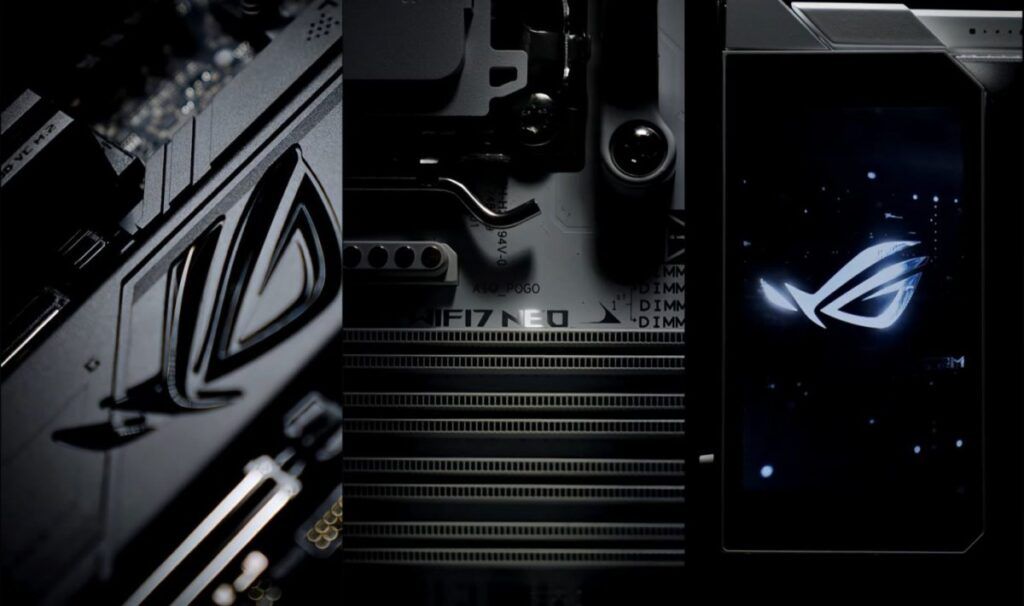
The film, lasting just 18 secondsoffers a series of close-up shots showing different models ready for launch. Although ASUS has not yet revealed the detailed technical specificationsit is clear that the NEO line will not be limited to a single product, but will embrace the brand’s most loved families.
“NEO” motherboards are considered a “refresh” of the ASUS line
In the video, aesthetic elements and logos belonging to the series are recognisable ROG, TUF Gaming e ProArtthe latter dedicated to professionals and content creators. Industry experts believe that the NEO series represents a incremental update (or refresh) rather than a total revolution.
Will ASUS present a “hologram” case at CES 2026? The teaser video of the ROG G1000 with AniMe Holo
It is likely that ASUS has worked to refine connectivity, improve stability and integrate new networking technologies. A fundamental clue comes from a close-up shot in the video, where the wording “WIFI7 NEO” is visible. This suggests that next-generation wireless connectivity will be one of the pillars of this new range.
ASUS, the motherboard nomenclature and the wait for CES 2026
In terms of nomenclature, it seems that ASUS has chosen one simple way to distinguish the new models: it is very likely that the suffix “NEO” will be added to the names of existing cards. This will allow users to immediately identify updated versions compared to the original ones released last year.
There are now a few days left until the opening of CES, where ASUS will show the entire range live. On that occasion we will find out if, in addition to Wi-Fi 7 and some aesthetic tweaks, the NEO series hides innovations in dissipation design or power management for the new generation AMD processors.