
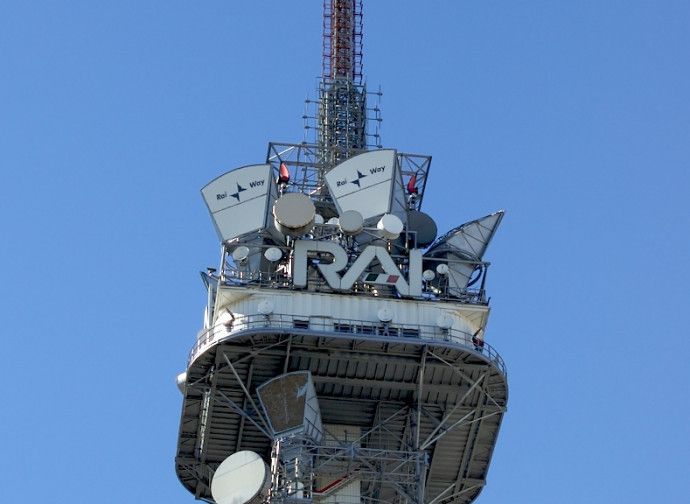
Ten years after the approval of law no. 220 of 28 December 2015 on Rai, commissioned by the government led by Matteo Renzi, the debate on the political control of public television becomes extremely topical again and takes on paradoxical contours. Today a significant part of the left accuses the centre-right of having transformed Rai into “TeleMeloni”, denouncing a use bent to the interests of the governing majority, but rarely remembers that that very law, approved ten years ago with the decisive support of the centre-left, has provided the executives with much more incisive tools to guide the governance and, indirectly, the editorial direction of the public service.
The Renzi reform was presented as a historic step to modernize the company, make it more efficient, managerial and finally autonomous from the parties, overcoming the tradition of parliamentary subdivision. In the declared intentions, Rai should have become a competitive media company, less rigid and free from political constraints. However, in hindsight, it is clear that that objective was not achieved and that the new institutional architecture ended up accentuating the company’s dependence on the executive.
The 2015 law has redesigned governance by reducing the Board of Directors to seven members and giving the government a central role in the appointment of the CEO, a figure who has been given very broad powers in terms of management, organization and strategic direction. This shift of the decision-making axis from Parliament to the government has made Rai more exposed to the majorities of the day, compressing the spaces for mediation and strengthening the executive’s control over a company that should, by definition, be at the service of citizens.
It is therefore not surprising that, over the years, all successive governments have used public TV as a tool for political legitimation and communication: the governments led by Renzi did it, those led by Giuseppe Conte did it and the Draghi government also did it. Not because there was force or exceptional abuse, but because the law allowed it, indeed made it structurally possible. In this sense, the current controversy over the alleged hegemony of the center-right over Rai appears at least incomplete if not hypocritical, because it ignores the original responsibility of those who have built a governance model that concentrates power in the hands of the executive.
Today Parliament once again discusses the reform of RAI and the proposals come from all sides, but the heart of the problem continues to be evaded: it is not a question of establishing which party or which coalition should control Rai, but of identifying the most effective way to remove it from any form of political control, as also required by Article 5 of the European Media Freedom Act (EMFA), a European regulation which requires Member States to guarantee the independence of public media through transparent appointment procedures and criteria based on competence and editorial autonomy. Yet, most legislative initiatives continue to think in terms of balance between majority and opposition, perpetuating a dividing logic that compresses internal pluralism and conditions the distribution of editorial resources according to political convenience rather than according to the real information needs of the country.
As long as the composition of the top bodies reflects agreements between partiesRai will remain a land of conquest and not an authentic public service. If we really want to turn the page, we need a radical paradigm shift, which breaks the link between politics and appointments. A model consistent with the EMFA could envisage a selection system totally independent of parties, based on objective, verifiable and public requirements, such as the establishment of a national list of qualified figures from the world of culture, information and management, from which the top management of Rai can be drawn through transparent procedures, even through a public draw. A mechanism of this type would drastically reduce political interference and shift attention from the criterion of belonging to that of merit. The experience of the BBC, despite its limitations, demonstrates that it is possible to build a public service in which the direct influence of the executive is contained by governance rules designed to protect editorial autonomy. In Italy, however, the issue remains cultural even before it is regulatory: the difficulty in accepting that Rai does not belong to the parties but to the citizens.
Ten years after the Renzi lawthe real balance to be made is this: the reform did not free Rai from politics, it simply shifted its center of gravity, strengthening the government to the detriment of Parliament and paving the way for those accusations of propaganda that today animate the public debate. Recognizing this fact is the first step towards an authentic reform, capable of restoring credibility, authority and independence to Rai, finally transforming it into a democratic garrison and not into the megaphone of those who, from time to time, occupy Palazzo Chigi.