Improve the quality of life of patients suffering from neurological diseases, such as multiple sclerosis, thanks to personalized rehabilitation and remote monitoring. Research like that of Vicenza Ilaria Siviero they can change people’s lives because they allow, thanks to telemedicine, to carry out effective rehabilitation even from home.
The prize
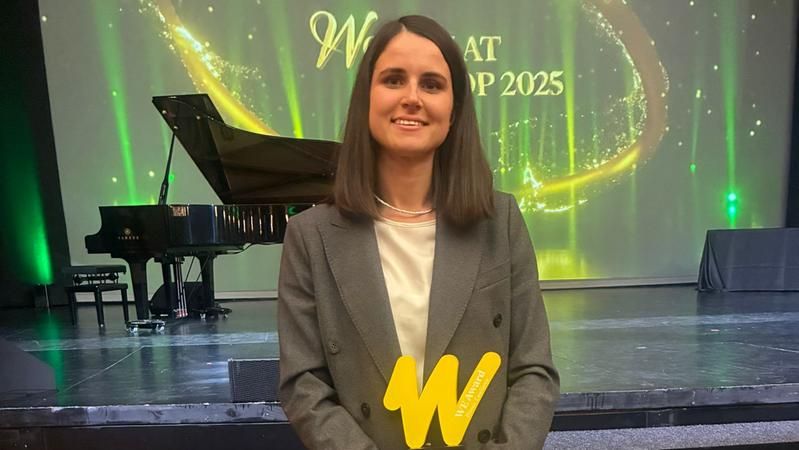
And it is for this innovation that Siviero was awarded, in the “Training and Research” category, with the Women at The Topthe recognition that celebrates the achievements of women promoters, in various fields, of innovation and social progress processes.
At the third edition of the We-Award Women Excellence promoted by Sole24Ore and from Financial TimesSiviero was selected from 800 candidates and awarded with 34 other women including entrepreneurs, teachers, professionals and women who have distinguished themselves in the scientific, research and cultural fields for their ability to generate a positive impact on the community.
Who is Ilaria Siviero
Siviero, 29 years old, degree in biomedical engineering and specialization in bioengineering at the University of Padua, he obtained a doctorate in computer science at the University of Verona, where he is today researcher post-doc. And it was precisely during her doctoral project, carried out with the guidance of professors Gloria Menegaz and Silvia Francesca Storti, that she developed the project awarded at the ‘Women at The Top 2025’ gala in Milan among the stories of ‘ordinary excellence’.
AI4Health project
His doctoral thesis ‘AI4Health: empowering telemedicine through explainable AI methods for personalized diagnosis, monitoring and treatment’ mainly concerned patients suffering from multiple sclerosis as part of a doctorate funded under the national operational program ‘Research and Innovation’. Through an electroencephalic headset – a wearable device equipped with electrodes capable of recording the electrical activity of the brain – and inertial movement sensors applied to the arm, it was possible, using dedicated algorithms, to detect and integrate both brain and motor signals, aimed at developing a brain-computer interface. This made it possible to monitor the patient’s mental load while carrying out each task, in order to ‘calibrate’ the rehabilitation in an ideal way for each patient, even remotely, thanks to telemedicine.
Scientific contribution and future
Ilaria Siviero, as stated in the motivation for the recognition, was awarded «for her pioneering contribution in combining neuroscience, artificial intelligence and biomedical engineering. During his doctoral career he developed innovative artificial intelligence methodologies applied to telemedicine and the analysis of neurophysiological signals, with advanced solutions for the monitoring and personalized rehabilitation of patients with neurological diseases. The recognition underlines the significant impact of his research in the field of digital health, the interdisciplinary nature of his studies and the social value of his scientific activity, which represent an example of talent and innovation in the panorama of Italian research». A research that is continuing successfully as a post-doc at the Department of Neuroscience, Biomedicine and Movement Sciences in Verona where Siviero is working on electroencephalogram technologies and transcranial magnetic stimulation in the context of neuroscience studies related to visual perception.