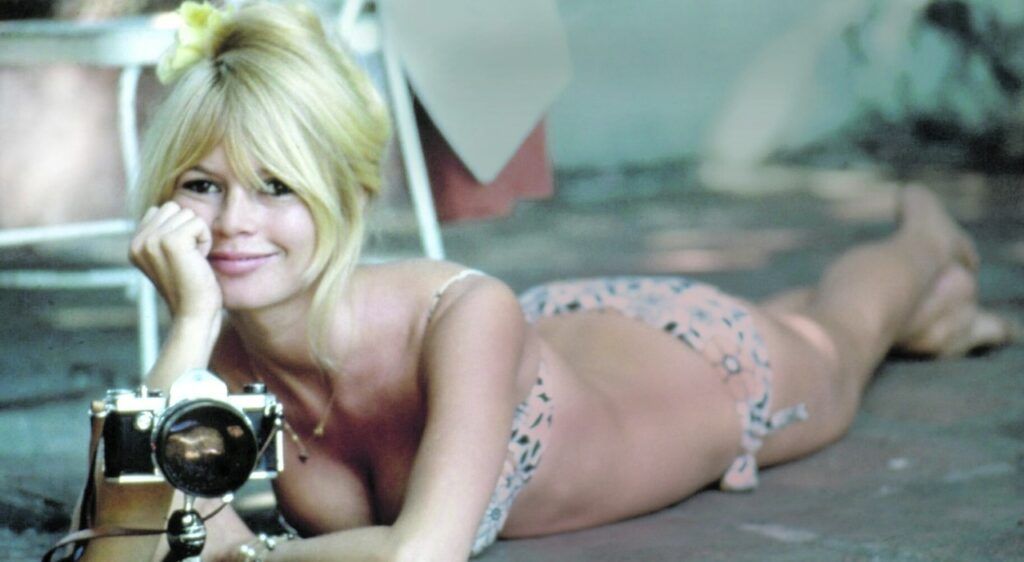
Farewell to Brigitte Bardot, myth of cinema, symbol of seduction and sexual freedom, icon of France (she embodied Marianne), combative champion of animals to whom she had dedicated the last fifty years of her life. A life marked by successes, excesses, abortions, two suicide attempts, four husbands, countless flirtations, an unloved son. The former actress, who retired from the stage way back in 1973 after 45 films and 70 songs to dedicate herself body and soul to her beloved beasts, passed away at the age of 91 in her famous villa La Mandrague, in Saint Tropez, assisted by her fourth husband Bernard D’Ormale and after having been treated twice in Toulon hospital following a delicate operation.
THE GRIT
After the first hospitalization, the fake news about her death spread: and she, showing off her proverbial determination, posted “I have no intention of getting out of the way, calm down.” Yesterday the President of France Emmanuel Macron expressed his national condolences on X: «French existence, universal splendor. We mourn a legend of the century.” Since she abandoned the cinema while she was at the height of her success thanks to films like Too Many Like It, The Girl with Sin, Contempt, Brigitte lived in Saint Tropez, a fishing village that became fashionable thanks to her presence. He had sold a villa called La Garrigue to his animal rights foundation, alternating his residence with nearby Mandrague which in the 1960s was the scene of his fiery love affairs.
THE LOVES
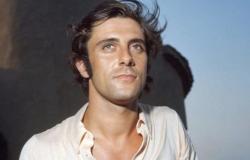
First with the Italian playboy Gigi Rizzi, who thanks to that flirtation shed light on the Italian Lovers and the Roman Dolce Vita: in the Capital we remember the crazy nights of BB and Rizzi engaged in dancing on the tables of the Hostaria dell’Orso. Then with the German nobleman Gunther Sachs, destined to become her third husband, who won her over by bombarding her with roses from his helicopter. BB, the image of the new rebellious and unscrupulous femininity, had her heart on the right (D’Ormale, married in 1992, is a former politician close to Le Pen’s National Front) and declared herself an anti-feminist: in her last interview, broadcast last year on French TV after half a century of silence, she declared that she “loved men too much” to accept equality. And to think that, used to doing her own thing, she had been an unaware feminist before the marches, the sit-ins, the political battles. Even as an old woman, she was still seductive despite her wrinkles, her white hair, her body tormented by arthritis that forced her to walk with a cane.
But his eyes, which had bewitched entire generations, still flashed with malice, intelligence and pride. “I was much happier when I stopped being a sex symbol,” she explained. In her golden age, Bardot embodied a revolutionary and brazen femininity, a mix of audacity and innocence that caused scandal. And it influenced fashion and customs: the actress was the first influencer in history, everyone tried to look like her. He left the cinema without regrets. To support his Foundation he had sold houses and jewels and then faced the most important battles: in defense of seals, against fur, hunting, bullfighting, ritual slaughter.
THE FAMILY
Born in Paris on 28 September 1934 to a wealthy family of industrialists, raised in the chic neighborhood of Passy, Brigitte had received an ultra-rigid Catholic education which she escaped by losing her virginity at the age of 15 to Roger Vadim who would later marry her and launch her into cinema. The first film that consecrates the Bardot myth is Too Many Like It (Et Dieu créa la femme): the actress dances the mambo showing off all her sex appeal, then success is a downhill road. The actress was directed by masters such as Clouzot (The Truth), Autant-Lara (The Girl with Sin), Godard (Contempt), Malle (Private Life) and in 1954 the great Steno entrusted her with the role of Poppea in the cult comedy My Son Nerone alongside the blond and curly-haired Alberto Sordi.
THE CLAIM
Whatever she does, BB causes a stir but she mocks the right-thinking and imposes herself with her pout, her wild blonde hair, her first topless sessions, her summers spent barefoot on the French Riviera, her cover stories: after Vadim will come Gilbert Bécaud, the very married Jean-Louis Trintignant, Sacha Distel, Sami Frey, Serge Gainsbourg who wrote the scandalous song Je t’aime noi non for her plus that he would later sing with Jane Birkin.
Instead, she was linked to Alain Delon, an animal rights activist like Bardot and a generous supporter of her Foundation. “My bed was crowded because I always feared loneliness,” confessed the actress. Simone De Beauvoir took the field against the moralistic crusades that target her: «Men are unable to free themselves from the myth of the woman-object», writes the philosopher, «Brigitte’s naturalness seems more perverse to them than sophistication». From her second husband Jacques Charrier in 1960 BB has her only heir Nicolas. Which he always refused: he had him raised by a nurse after trying to terminate the pregnancy (“it was like a tumor”), he said in the shock autobiography that Nicolas took to court in 1996.
PEACE
Mother and son, who lives in Norway and is a grandfather, would later reconcile but they saw each other very little. And the battle for the inheritance will now pit Nicolas against the Foundation. Bardot has divided recent years between animal rights battles and controversies: fined for inciting hatred against Muslims, she infuriated gays by calling them “freak freaks”. Openly right-wing, in the 1960s she supported De Gaulle (and was the first woman to show up at the Elysée in trousers), in 2017 she supported Marine Le Pen against Macron’s candidacy. Surrounded by dogs, cats, chickens, goats, donkeys and pigs, she left yesterday without regrets. Just as he had lived.
Gloria Satta