
Of
Alessandra Muglia
US action in a Muslim region. There is no joint Washington-Abuja report
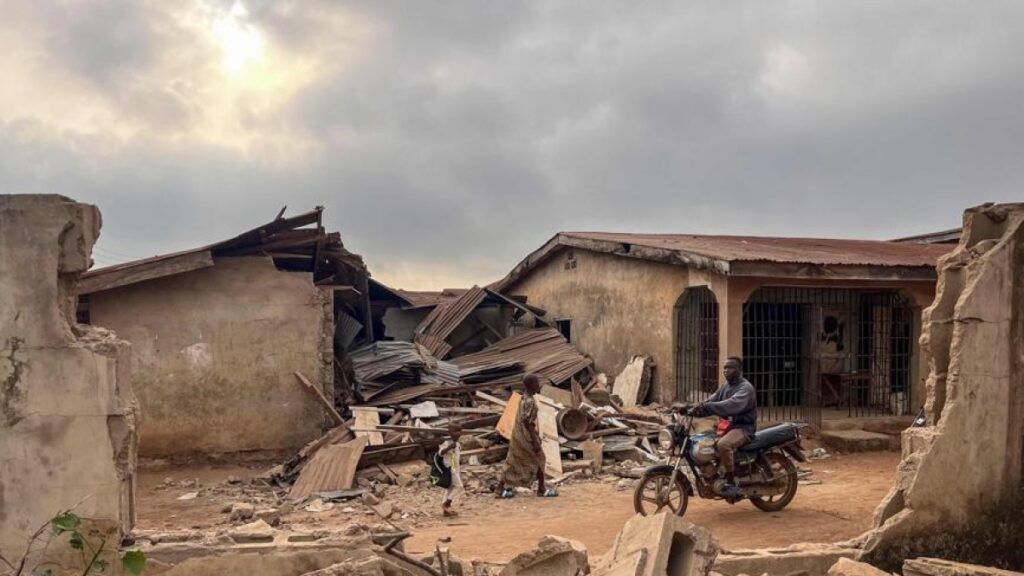
«Why here?». The question ricochets from the streets of Sokoto, the desolate state in the north-west of Nigeria where on Christmas evening the Americans dropped over 16 Tomahawk missiles in defense of “the persecuted Christians”, claimed Donald Trump. Too bad that the region is populated almost exclusively by Muslims. “Here we are a minority but we have no problems of persecution”, assured Bishop Matthew Hassan Kukah, from Sokoto.
The choice of this region as the target of the raid surprised many, also because the area has historically been more the victim of bandits and robbers than of terrorists. There are other areas – in the North-West and especially in the North-East – most affected by jihadists, even recently: in November the kidnapping of 200 children from a Catholic school in the Nigerian state of Niger, the latest attack on Christmas Eve in a mosque in Maiduguri, in Borno.
Sokoto as a target has also raised doubts about the effective contribution of the Nigerian armed forces in planning the missiona necessary condition to avoid making it appear like an invasion. While denying that a “genocide” of Christians is taking place in the African country, as Trump claims, the Nigerian authorities have chosen to collaborate on an anti-terrorism mission with Washington, which had also threatened unilateral action.
Skepticism is circulating in Abuja: «The attack in Sokoto, where there is no previous consolidated presence of ISIS, raises questions: Did the Nigerian military authorities actually exercise control over the operation or were they mere spectators?» insinuates an opposition politician, Umar Ardo.
The fact that Abuja and Washington provided different reconstructions of the mission raises doubts: The Nigerian government reported 16 GPS-guided bombs fired from MQ-9 Reaper drones launched from a Navy warship in the Gulf of Guinea. Different dynamics in the US version according to which Tomahawk missiles were launched.
Two days after the operation, his results still seem vague: Washington and Abuja they did not make a joint report and theirs budgets diverge. Trump claimed to have killed the “terrorism scum of ISIS” and assured, in an interview with Politico, that the jihadist camps had been “decimated”, but without providing details or evidence that the attacks were effective. On the other side the Nigerian authorities have made it known that the information they have on the raid is “incomplete”.
Meanwhile, Nigerian president Bola Tinubu remains behind the scenes (many of his compatriots reproach him for letting Trump announce the blitz). His advisor Daniel Bwala goes ahead: the government has designated ISIS, Boko Haram and a more recent group known as Lakurawa, active in Sokoto, as terrorist entities, thus allowing any of them to be attacked, but “it is not clear who has been hit”, he declared on Friday. Yesterday he adjusted his aim: «The raids targeted ISIS militants who came from the Sahel to collaborate with local Lakurawa jihadists and groups of “bandits”». Good job, why not clarify it now?
December 27, 2025
© ALL RIGHTS RESERVED