

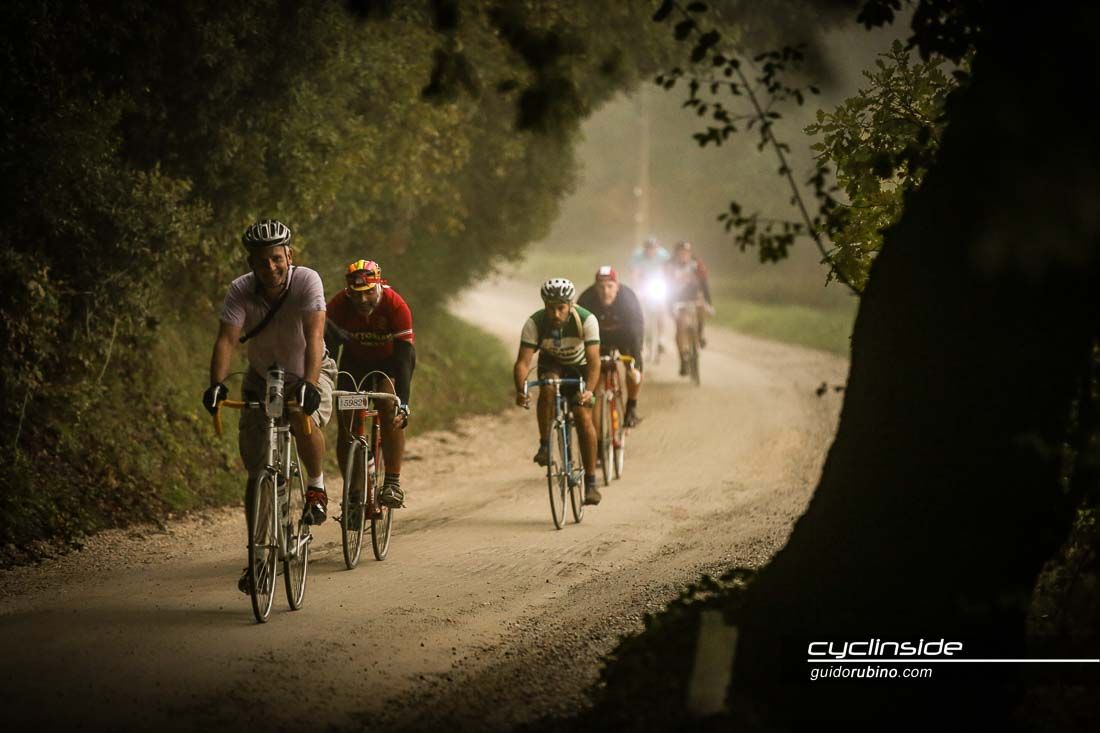
Historic bicycles are transforming and growing in a direction that makes purists frown, but they are becoming the expression of a rediscovery that is richness, variety and non-limitation.
There was a time when historical cycling was above all an exercise in rigour. A world made of hand-welded frames, visible joints, hard gears and down tube gear changes; of wool sweaters that pinched the skin and of bicycles that told, without mediation, a specific era of cycling. It was an almost philological form of re-enactment, in which respect for more or less written rules counted as much as effort on the pedals. Participating meant, first of all, adhering to a code.
Historic cycling, new course
That world has not disappeared. It still exists, alive and recognizable. But it is no longer the only possible expression of historic cycling. In recent years something has moved, slowly but evidently, transforming these events into something broader, more fluid and, in some ways, surprisingly contemporary.
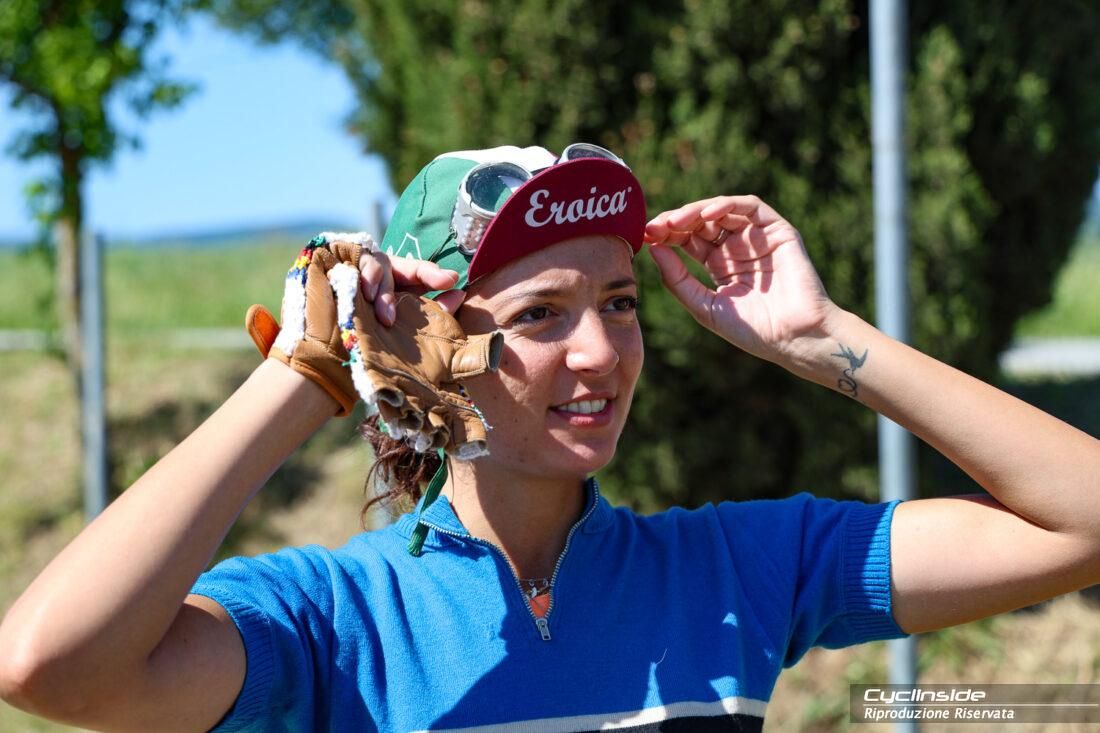
The turning point was certainly the success of events like L’Eroica, capable of emerging from the niche dimension to become a cultural phenomenon that attracted the attention of even those who are less interested in the history of the bicycle and cycling itself. From then on the model spread, reinterpreted, adapted to different territories and sensitivities. And together with the public, the very meaning of participating has also changed. Historic cycling is no longer just a celebration of the past: it has become an alternative way of experiencing the present.
The essentiality of the solutions of the past
In an era dominated by technology, by constant measurement of performance, by devices that record every meter travelled, the choice to pedal on an essential bicycle has taken on an almost counter-current value.
It’s not about rejecting progress, but about suspending it for a few hours.
To choose a different, more human speed. No batteries to check, no displays to interpret, no final time anxiety. Just the road, the rhythm that changes depending on the wind and your legs, and the freedom to stop when something deserves attention.
It is also for this reason that historical cycling increasingly speaks to a transversal audience. Not just cycling history enthusiasts, but cyclists looking for a different, less competitive and more sensorial experience. A ride that doesn’t aim for the result, but for the journey. Which does not measure performance, but the quality of time spent in the saddle.
At the same time, the relationship with the medium has changed. Philological research, still alive and respected, has been accompanied by a new technical interpretation. Bicycles that recall the aesthetics of the past but use more reliable materials, more comfortable solutions, geometries designed to tackle long distances and dirt roads. It is not a betrayal of the original spirit, but a necessary adaptation to make that experience accessible to a wider audience. And it’s not even a move towards more modern solutions towards the gravel bicycle (which, in another way, is succeeding precisely because of this more modern interpretation).
Less rigor, more inclusiveness
And it is precisely here that one of the most interesting transformations takes place. Cyclocycle races today are becoming more and more inclusive. Less formal rigor, less control over the orthodoxy of the medium, more attention to participation. This does not mean that rigor has disappeared: there are events that continue to defend it consistently and which represent, for many, an identity point of reference. But alongside these, a parallel universe has developed, made up of appointments where the objective is not to demonstrate loyalty to a canon, but to share an experience.
It is the sector that is growing the most
And it is precisely this second trend that shows the greatest capacity for growth. Not because one is “better” than the other, but because it intercepts a widespread need: that of pedaling without feeling judged, of participating without having to overcome too high a cultural or technical threshold. It is a dynamic that the organizers cannot ignore, because it speaks of a profound change in the way people approach cycling.
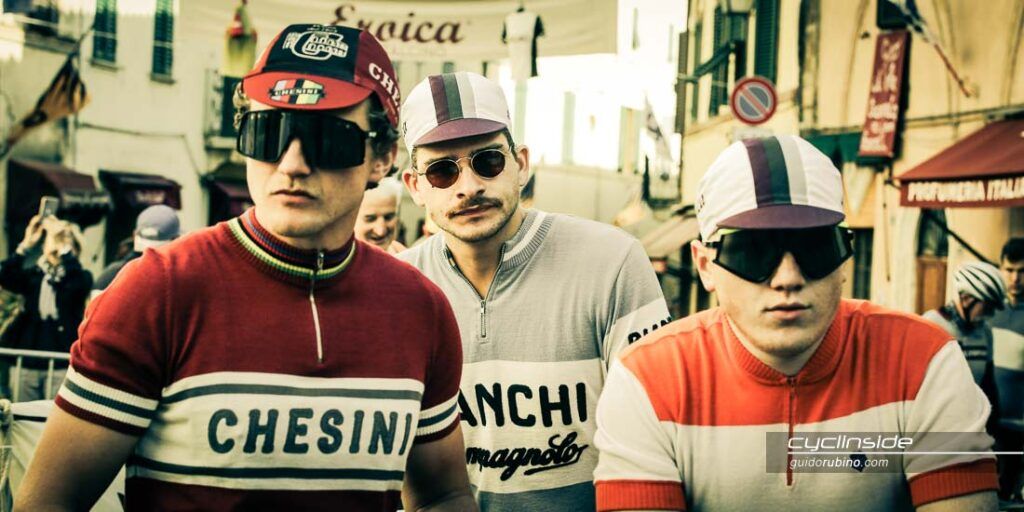
Aesthetics also follows this transformation. Historic shirts coexist with contemporary uniforms, always made of wool but increasingly designed for groups of friends, informal collectives, small communities born around a shared vision rather than a sporting tradition. Identity no longer passes only from loyalty to an era, but from the desire to be part of something. Which is the same reasoning that led to the definition of those historic shirts. There is a desire to recognize each other along the way.
Beyond the re-enactment
In this sense, historic cycling events have become much more than a re-enactment. They are social, cultural and even political spaces in their way of reinterpreting the relationship with time, with the territory and with the bicycle itself. They have put forgotten roads, towns off the main routes, ways of traveling that seemed outdated, back into focus.
Perhaps this is precisely their greatest value: not preserving the past like a museum object, but using it as a tool to imagine a different present. A present in which pedaling slowly is not a renunciation, but a choice.
An increase that risks losing meaning
Then there is an element that deserves to be said clearly. Those who participate in historic cycling events, in the vast majority of cases, have not abandoned the modern bicycle. Indeed, he often uses it continuously, knows it thoroughly and has no intention of giving it up. The choice to pedal on a vintage bike is not a rejection of the present, but a conscious parenthesis, a different way of experiencing the cycling gesture. Precisely for this reason, the idea of multiplying events risks losing sight of the point: there is no point in filling the calendar if a strong identity is missing. Better to have a few events, organized, recognisable, capable of offering a complete experience made up of territory, hospitality and story, rather than a sequence of events all the same, held together only by the label of “cyclostorica”. In this sense, the future does not pass so much from increasing numbers, but from giving value to what already exists, making each event a truly significant moment for those who choose to be there.
The Giro d’Italia d’Epoca grows and questions itself: enthusiasm, numbers and the challenge of staying in balance