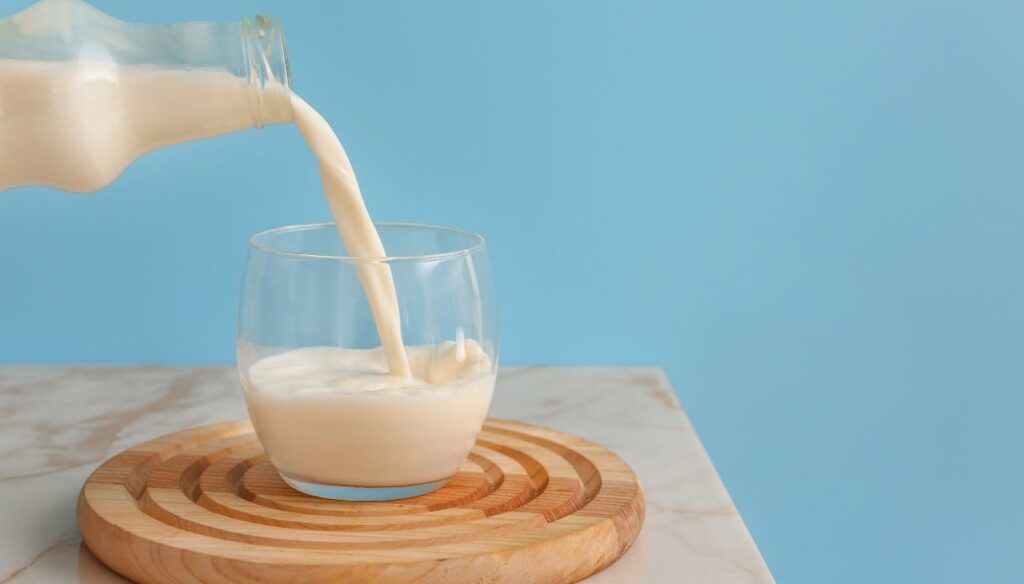
After weeks of discussion, the Ministry of Agriculture, Food Sovereignty and Forestry (Masaf) and the associations representing the dairy sector have reached an agreement on the price of milk at the stable, valid for the first quarter of 2026.
Milk represents the raw material for PDO and PGI cheeses, butter, yoghurt and derivatives, which make up a significant portion of exports and Made in Italy. However, precisely for this reason, the dairy supply chain is exposed to continuous tensions between production, transformation and distribution. Hence, the need for an agreement.
What the agreement provides
The agreement establishes a price of 0.54 euros per litre for January 2026, 0,53 euro in February and 0,52 euro in March, following a decreasing progression that takes into account:
- seasonal dynamics of production;
- average breeding costs;
- market prospects.
What is most important, however, is that it provides a clear and shared reference in an economic context still marked by strong uncertainties.
In recent months, the increase in production costs (from energy to feed, through labor and logistics) had put pressure on the stables in particular, fueling the real risk of a reduction in production and the abandonment of many livestock farms (particularly small and medium-sized ones). The absence of a shared price risked leaving part of national production behind, with knock-on effects throughout the entire supply chain.
Export aid and production control
Among the qualifying elements of the agreement there is also the provision of a aid package for the internationalization and promotion of the supply chain’s products, together with the development of a mechanism to avoid exceeding one’s production average. This last aspect is anything but marginal: excessive production compared to the market’s absorption capacity risks depressing prices, nullifying the efforts made to guarantee adequate remuneration for farmers.
Il volume controlif managed in a shared and transparent way, can become an instrument of balance, capable of protecting the income of the stables without penalizing the processing industry. It is a theme that brings to mind the old milk quotas, but which today is placed in a completely different context, made up of voluntary agreements and supply chain responsibilities, rather than impositions from above.
Economic impacts and prospects for 2026
The agreement on the price of milk should be read as a piece of a broader strategy for stabilizing the primary sector. The values set (54, 53 and 52 cents per litre) do not represent an epochal turning point, but they mark a level of remuneration which, if accompanied by support policies and effective valorisation of the product, can contribute to make farming sustainable. That is, it is a question of guaranteeing a point of balance, which does not structurally resolve all the critical issues in the sector, but guarantees a basis of stability in the short term. Cil allows farmers to plan their activities and the processing industry to operate with greater certainty.
Of course, much will also depend on the performance of international markets, energy costs and the demand for dairy products, both in Italy and abroad. It is therefore not just an agreement on price, but a broader vision of agri-food policy, which aims to strengthen the competitiveness of the sector in the medium-long term.