Il 2026 is preparing to be a turning point for the automotive world: from city cars to supercars, from small cars to SUVs, the manufacturers are about to reveal patterns which will change the perception of what it means to drive. Technological innovations, widespread electrification, redesigned designs: every choice tells a strategy, every detail anticipates the market challenge. But what will they really be the news that will dominate Italian and European roads? Before discovering them all, it is worth observing the most interesting transformations, those that mix tradition and future in a balance never seen before.
The charge of the Germans
The first to move is Volkswagenwhich prepares a silent but heavy turning point like a milestone. The Polo, symbol of German rationality applied to the city, doubles. Alongside the traditional version comes a new electric version, the ID.Polo. Not an exercise in style, but a concrete car: just over four metres, clean proportions, no special effects. The platform is the MEB+, an evolution of the one that has already given shape to the group’s electric vehicles, while powers and batteries cover a wide range, designed to meet different needs. It’s a Polo that changes its voice, not its character.
Going up the segment, Mercedes-Benz prepares a strategic move that tells a lot about his future. There new C-Class it will be born on a native electric architecture, the Mercedes-Benz Electric Architecture, but without closing the door to traditional engines. A choice that speaks of a true, non-ideological transition. 800 volt technology, refined solutions to reduce consumption and an aesthetic that promises to be solid, almost institutional. It will arrive in the second half of 2026, with the ambition of remaining a reference, whatever the engine.
In Munich, however, BMW chooses the path of clear separation. There new i3 it will no longer be the “electric 3 Series”, but a model with its own identity, daughter of the Neue Klasse language. Clean lines, closed grille, next-generation technology and advanced architecture. The thermal 3 Series will continue its path, parallel but distinct. It is a decision that marks a before and after in the way of conceiving electric: no longer an alternative, but an autonomous branch.
A welcome return and two new cars
Then there are those who go back to their origins. Smart, after years of metamorphosis, prepares a two-seater that explicitly looks at its history: #2. A compact silhouette, Chinese production thanks to the partnership with Geely, exclusively electric traction. It is not nostalgia as an end in itself: it is the search for meaning in an urban market that has lost simplicity.
Higher up, the discussion inevitably becomes more emotional. TO Maranello the electric enters the heart of the myth for the first time. The first Ferrari battery-powered will not just be a technological exercise, but a declaration of identity. 880 volt architecture, four motors, structural battery and an almost obsessive attention to the theme of sound. Because even silence, in those parts, must have a character. It will be a cultural test bed even before a technical one.
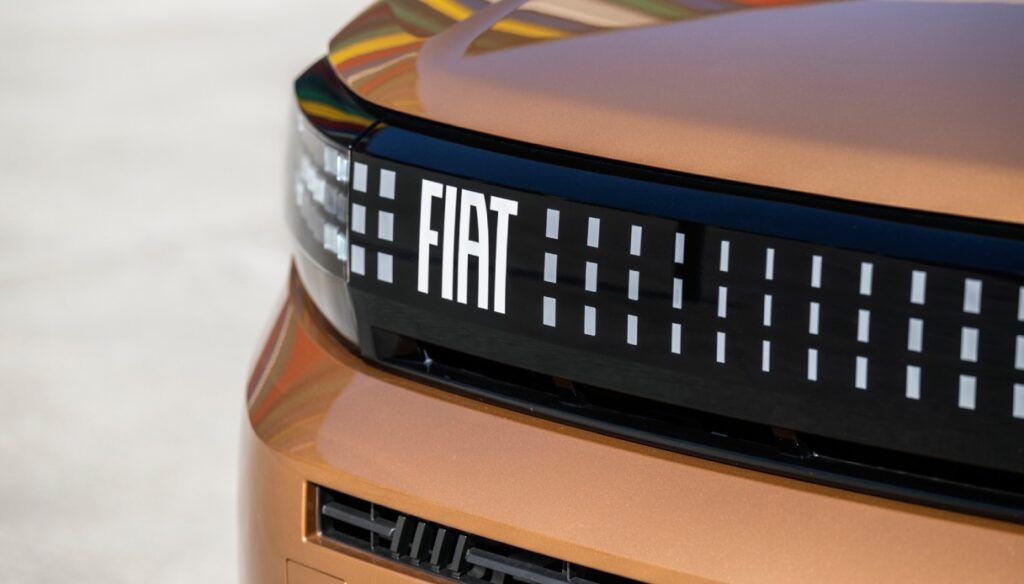
Finally, at the top of this mosaic, there is the new family Panda. Two models, one idea: broadening the concept of the small car until it becomes a system. A spacious SUV and a Fastback with a more dynamic profile, Smart Car platform and engines for all tastes, from electric to thermal. Don’t call them heirs, don’t call them revolutions. They are the attempt, perhaps the most Italian of all, to remain popular without becoming banal. And it is in this logic that the future Giga Panda or Fiat Grizzly will be born, depending on what this long-awaited car will be called.