Truly remarkable from a scientific, qualitative and evocative point of view, the exhibition continues the research work of the MA*GA Museum in Gallarate, focused – as in 2024-2025 with the Art and design exhibition – on the study and valorization of that great artistic heritage of modern art, in particular abstract painting from the 1930s to the 1950s, which developed in Milan starting from that hotbed of encounters and art that was the galleria the Million Of Ghiringhelli – where he exhibits Vassily Kandinsky in 1934 – and then with the Como groupto radiate into the area to the north of which, due to the happy combination of constructive and creative fervor of that period, Gallarate now finds itself to be an important center of collection and study.
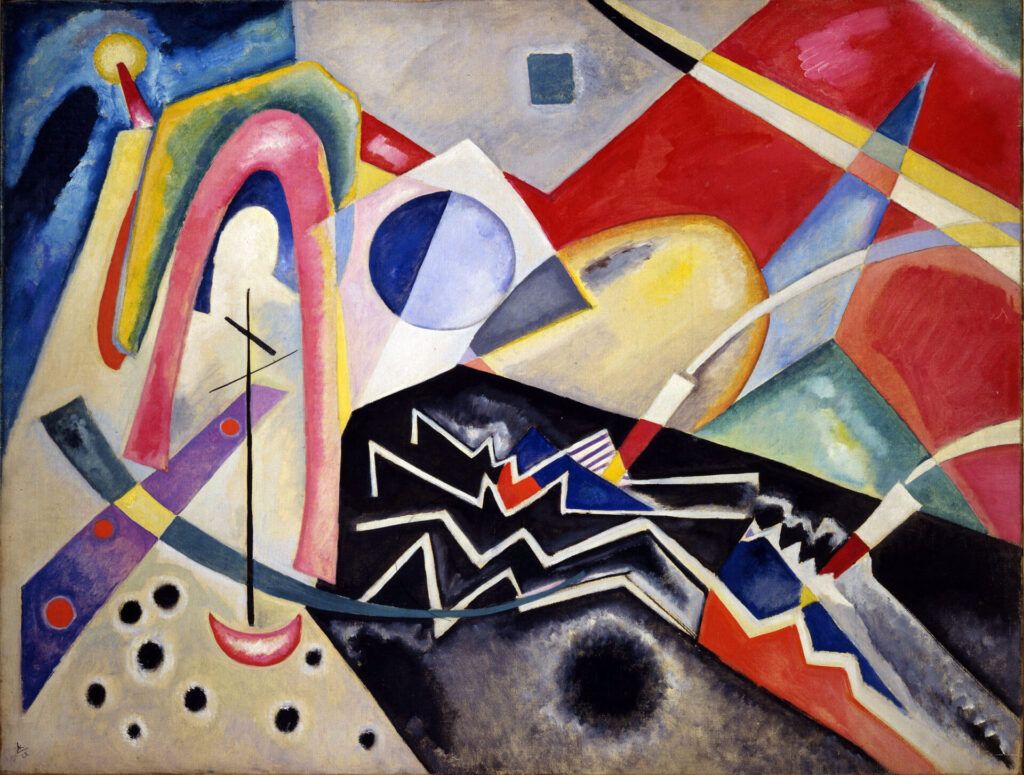
Kandinsky and Italyfinds a wide-ranging opportunity in the cooperation between MAGA and the Ca’ Pesaro Foundation of Venice, with the care of Elisabetta Barisoni and Emma Zanella, giving rise to an overview that is part of the Venetian foundation’s heritage of Kandinsky’s works, Paul Klee and other “fathers” of abstractionism, investigating the beginnings of the movement as it expanded into Italy, starting precisely from Milan. The narrative starts from Kandinsky with the great work Zig Zag Bianchifrom 1922, and a series of his drawings, where there appears both a reinvention of reality with the synthesis of point, line, surface, and its formal and chromatic explosion – of a carefully designed freedom – with a sort of almost esoteric cultural appeal.
These are succeeded by works by Paul Klee – very beautiful and numerous – where the step beyond reality takes place through ancestral signs, to reconstruct language and landscapes (of the soul), with that light lyricism which then seems to be found in Osvaldo Liciniin the Italian section. And in the perception of these contaminations and of the composition we measure how meditative, planning and compositional abstractionism is, in the free, but guided, use of forms and graphics.
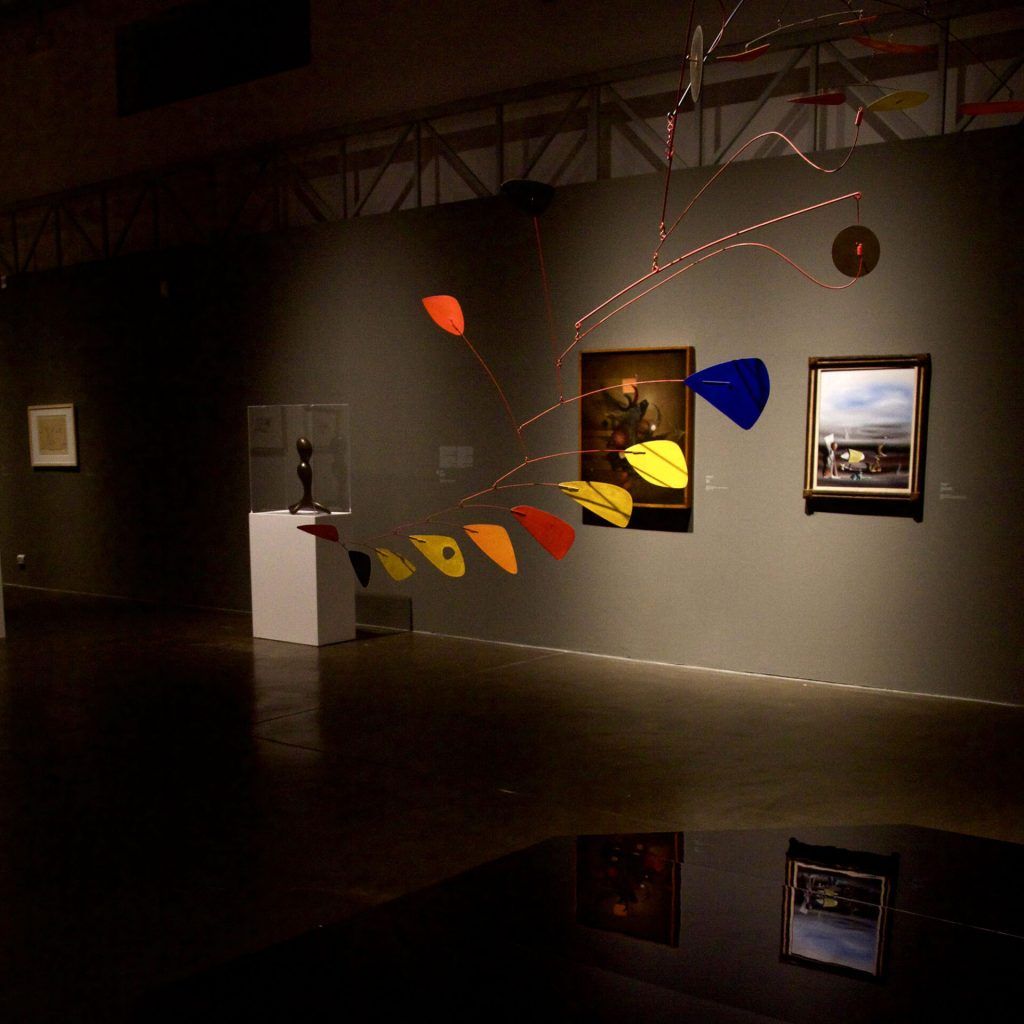
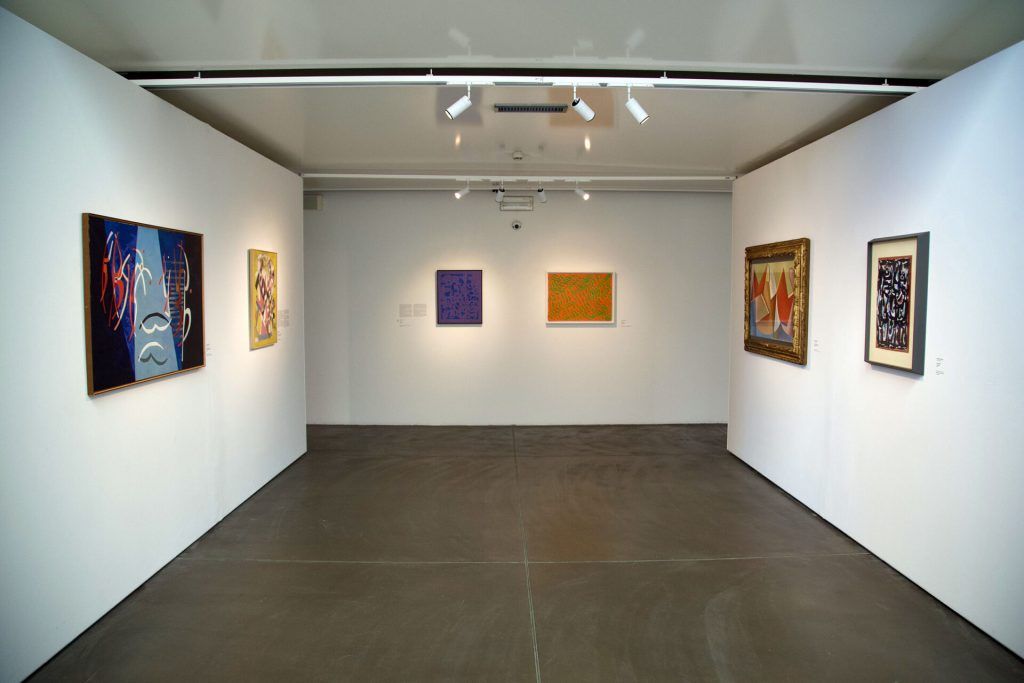
Followed by works by Antoni Tapies, Ives Tanguy, Miro and others where the abstract takes more emotional forms, until arriving at a great work of Alexander Calderthe mobile Red yellow and blue gongs from 1955, which hovering in space suggests the expansion of abstractionism as well as the emotion of the visitor along the way. The story moves on to the spread of Abstractionism in Italy, starting from Il Milione and the Como Group, with artists who translate it into very careful and rational research on geometric relationships and chromatic, consonant and crystalline agreements, in search of a certain purity of the forms that populate the ultra-reality of the abstract. We find, among others, Mario Radice, Manlio Rho, Carla Badialilithe useless machines Of Bruno Munarithe delicate paintings of Licini, always with measured compositions commensurate with the project and research, with mathematical and musical rhythms. With the viaticum of the impetuosity of jagged porcelain of Lucio Fontana and its material, pasty texture Space conceptfrom 1961, but, mind you, many other authors on display, you are taken to the section on the diffusion of abstract art throughout Italy, where painting from rational is enriched with impetus, becoming more sanguine and passionate.
Starting from synthetic landscapes, with flat backgrounds in abstract black outlines, almost an evolution of partitionismOf Roberto Birolli and partners, through strong geometries of Luigi Veronesi – and many other great artists exhibited – the paintings become “abstract expressionist” with Roberto Mattawith a moment of reinvention of the realism (of abstract composition) of Guttusoa sort of return to pathos, a sort of reunification of the cycle. The beautiful exhibition project, I would say emotional as well as scientific, is demonstrated by the rich catalogue, where the curators propose the narrative – later developed with numerous other contributions – of the historical and personal events in a clear and also compelling way.