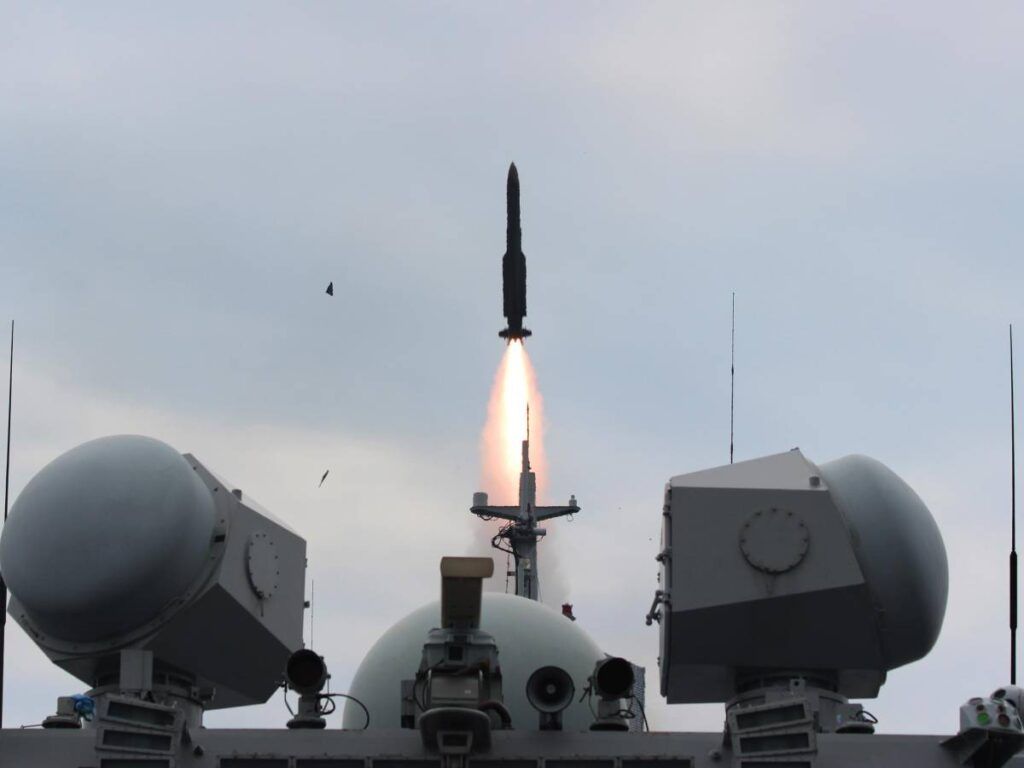
The China may have figured out how to overturn one of the fundamental pillars of modern warfare: the relationship between cost of the attack e cost of defense. With the introduction of new hypersonic missiles at a very low priceIn fact, Beijing aims to make it economically unsustainable for rivals to protect their infrastructure and military fleets, opening a completely new phase of global strategic competition. In the spotlight we find him YKJ-1000a hypersonic glide missile developed by the Chinese aerospace company Lingkong Tianxing. The weapon, recently presented publicly, would have a range of up to 1,300 kilometers and a maximum speed of Mach 7, enough to put the most advanced Western interception systems in serious difficulty. In any case, what strikes analysts and military observers is not just its performance, but the price…
Missili low cost Made in China
The missile was nicknamed “cement-coated” for the use of civilian-grade materials – such as expanded concrete – in the thermal protection of the warhead; this choice drastically reduces the production costs without compromising, at least according to the designers, theoperational effectiveness of the weapon. Estimates indicate a unit cost of around 700,000 yuan, just under $100,000: a paltry sum compared to the millions needed for each Western interceptor. For comparison, a single US naval missile SM-6 super i 4 million dollarswhile a intercettore THAAD it can cost up to 15. Even i Patriot PAC-3which Taipei intends to purchase, fluctuate between 3.7 and 4.2 million the one.
The result is an evident asymmetry: defending costs dozens of times more than attacking. According to what was reported by South China Morning Postthis imbalance could overturn the very logic of future conflicts. An attacker equipped with large quantities of low cost missiles could be saturate opposing defensesforcing the enemy to choose between running out of supplies or accepting significant losses. A dynamic already seen in Ukraine, where drones costing a few hundred dollars have forced the other side to use hundreds of thousands of missiles.
The Chinese strategy
There is another reasoning to be done. In case systems like the YKJ-1000 come exportedeven countries with limited military capabilities could put pressure on the fleets and bases of much more advanced nations. A sufficient number of these missiles, for example, could theoretically threaten elite naval groups such as the US aircraft carrierswhose operational range is comparable to the declared range of the new Chinese carrier.
Lingkong Tianxing also represents a industrial model which closely concerns the leaders in Beijing. The company exploited mature civilian supply chainscomponents already widespread in the drone market – such as optical modules and BeiDou navigation chips – and simplified production processes, such as the die-casting of structural parts. An ever closer fusion between civil and military industry, consistent with the “Made in China” strategy.
However, several commentators online put in doubt the fact that a hypersonic missile can really cost so little, especially considering fuel and engine. The company itself promised clarifications.
Beyond the controversy, the political and strategic message is clear: if the numbers are confirmed, China could have paved the way for an era in which quantity, made accessible by low cost, once again becomes as decisive as – if not more than – technological sophistication.