
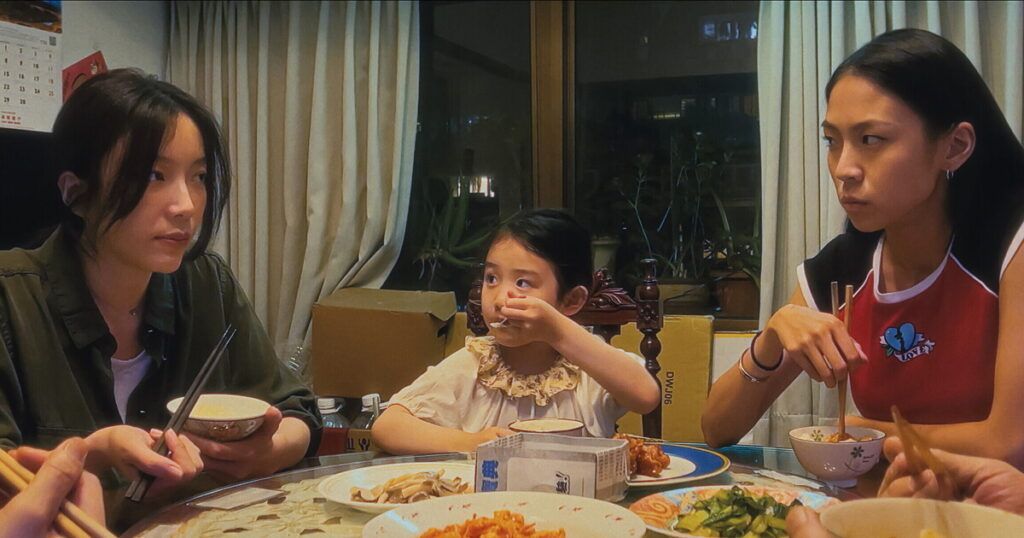
What happens when three generations of women rebel against superstition and traditionalism, in a modern and vibrant city like Taipei? But what era do you live in, grandmother, girls don’t bind their feet anymore and left-handed people are everywhere. Director and producer Shih-Ching Tsou’s solo debut at the cinema
I thought the devil’s hand could help,” justifies I-Jing, a five-year-old girl who has just moved to Taipei with her mother Shu-Fen and her older sister, I-Ann. But in this all-Taiwanese story that spans four generations of women there is none move, no devil, and the hand that according to his grandfather, a child of the White Terror era that “smells of chou doufu”, smelly tofu, does “the devil’s work”, is actually just the hand of a left-handed girl.
The “left-handed girl” is the original title of the filmin Chinese and English, has been released in Italian cinemas last December 22 with the title “My family in Taipei”, winner of the Best Film Award at the Rome Film Festival 2025 and Taiwanese candidate for Best International Film at the Oscars. The Taiwanese director and producer, Shih-Ching Tsousees herself in the role of I-Jing: “I was born left-handed and this film was born from something my grandfather told me when I was in high school. He told me that my left hand is ‘the devil’s hand’ and asked me not to use it, even though at that point I was no longer left-handed”, she said to describe the film, his first solo feature film with the help of his collaborator long-time Sean Baker, the Oscar-winning independent director of Anora, who co-wrote, produced and edited the film. “When I met Sean at an editing class in 1999 in the United States, I told him what my grandfather had said, and he thought it was a wonderful idea for a story because of this concept of taboo,” about conformism and pressure on women in Taiwanese society. That’s why making the film was “an act of memory and healing,” he said.
From the first minutes Tsou manages to transport your heart and mind into the vibrant and frenetic life of Taipei, the traffic, the bright signs, the night market that never closes and a house a little smaller than expected, even the instant ramen has a unique flavour, enough to make you want to eat it every day. “It seems like a magical place,” I-Jing says softly without having yet gotten out of the car, as she turns her kaleidoscope between her fingers, in complete harmony with the colors of the Taiwanese capital. The three women begin to experience the city in different but complementary ways, between school, a red light shop selling areca nuts and a noodle kiosk in the Taipei night market, they run through the streets, the alleys, followed not by a camera but only by an iPhone: it is not the first time that Tsou and Baker have shot a film entirely with a telephone, they have already done so in 2015 with Tangerine – again due to budget problems.
The fourth generation is represented by the matriarch grandmother, Xue-Mei Wu, who runs a shady immigration traffic from the United States with “precious” fake passports, has eyes only for the male child of the family, doesn’t bat an eyelid when during a family argument in which everyone blames each other her husband stops the conversation and says: why does the youngest in the family eat with her left hand? The film deals with a continuous struggle between a sense of duty in a still patriarchal society and the desire of three modern girls, in a city that no longer reflects the traditionalist mentality of their grandparents – and occasionally also of their mother Shu-Fen, poised between past and future. Not even I-Jing, the youngest and purest character in the family manages to remain immune to the sense of “dishonor” and of diu mianzilose face, still alive in Taiwanese societyas in the Chinese one, says Tsou herself who defines her mother as the “classic tiger mother”.
So at just five years old, her grandfather’s words echo in her head to the point of making her tempted to chase away that demon with a large kitchen knife, then to bandage the wrong hand with a colored handkerchief so as not to see it again and try not to use it, or to start stealing some toys and putting all the blame on that move But when Grandma tells Shu-Fen, she desperately needs money to pay off her ex-husband’s debts: “A married daughter is like water being poured away,” it is not worth treating her well, then the colored handkerchief is torn away forcefully, I-Jing again takes the power of the left hand and steals a “precious” object. Suddenly the “hand of the devil” according to the grandfather becomes the “hand of God” for the grandmotherthe little girl suddenly “the favorite granddaughter”, but even in this case it is only selfishness and superstition. But what era do you live in?, women don’t bind their feet anymore, and left-handed people are everywhere, I-Ann reproaches her grandfather. And you, stop confusing her, she tells her grandmother. “It’s your hand,” she says to her sister, but also a bit like a daughter, with care and protection.