We’ve been talking about it for a year, we’ve been talking about it for almost twenty years with Cyclinside; so, we like the idea of ending the year with an ode to cycling. A reading that accompanies us to a new year that will be full of news but we already know that it will not betray our passion. Those who cycle know it, the bicycle fascinates from the first moment. From when you learn to keep yourself in balance and then continue as you appreciate its efficiency. The bicycle is an amplifier of human capacity. This is what fascinates us.
The secret to bicycle longevity
In the vast panorama of human inventions, few can boast longevity and design coherence comparable to those of the bicycle. It is not just a means of transportation, but a rare balance between physics, engineering and human physiology. A balance so successful that it has resisted over a century of technological progress without losing centrality.
Unlike many machines created to be surpassed, the bicycle seems to have reached an almost definitive form from the beginning. Not because it is perfect in an absolute sense, but because it manages to place itself in a surprisingly efficient way at the meeting point between the human body, energy and movement. All the technology and evolution we talk about here, after all, are nothing but trappings of that essentiality that we continue to recognize and that we sometimes fear getting lost by following fashions and evolutions that may appear misleading.
But there is no danger.
Mechanics as a universal language
One of the most fascinating aspects of the bicycle is its mechanical transparency. Everything that happens is visible, understandable, measurable. There are no hidden processes: the force applied to the pedals turns into rotation, rotation becomes forward motion. It is a logical chain even before a mechanical one.
The often underestimated chain drive is one of the most successful examples of engineering efficiency ever created. Under ideal conditions, more than 95 percent of the athlete’s energy actually reaches the rear wheel. A value that many industrial machines can only envy. In an age where complexity is often synonymous with progress, the bicycle proves that well-designed simplicity can be unbeatable.
Even the wheel, an ancient element, finds one of its most refined applications in the bicycle. It drastically reduces friction with the ground, allows high speeds with limited energy expenditure and works in perfect synergy with the human body. It is no coincidence that, with the same amount of effort, a person on a bicycle can cover distances many times greater than those who move on foot.
Efficiency as a cultural value
This extraordinary efficiency is not just a technical fact, but a cultural fact. The bicycle taught, before many other objects, that technology does not necessarily have to be invasive or energy-intensive to be effective. On the contrary, it can work better precisely when it simply enhances what human beings already know how to do.
During the twentieth century, the bicycle became a privileged study tool for engineers, physiologists and designers. Through it we understood how the human body is optimized for cyclic movement and how the pedaling gesture represents an almost ideal synthesis between power, resistance and control.
It is no coincidence that many energy efficiency models still used today take the bicycle as an implicit reference. It is the silent yardstick by which other forms of mobility are judged.
A balance that stands the test of time
The history of the bicycle is also the history of surprising design stability. While cars, planes and electronic devices have been disrupted by successive waves of innovation, the bicycle has continued to evolve by subtraction, not accumulation.
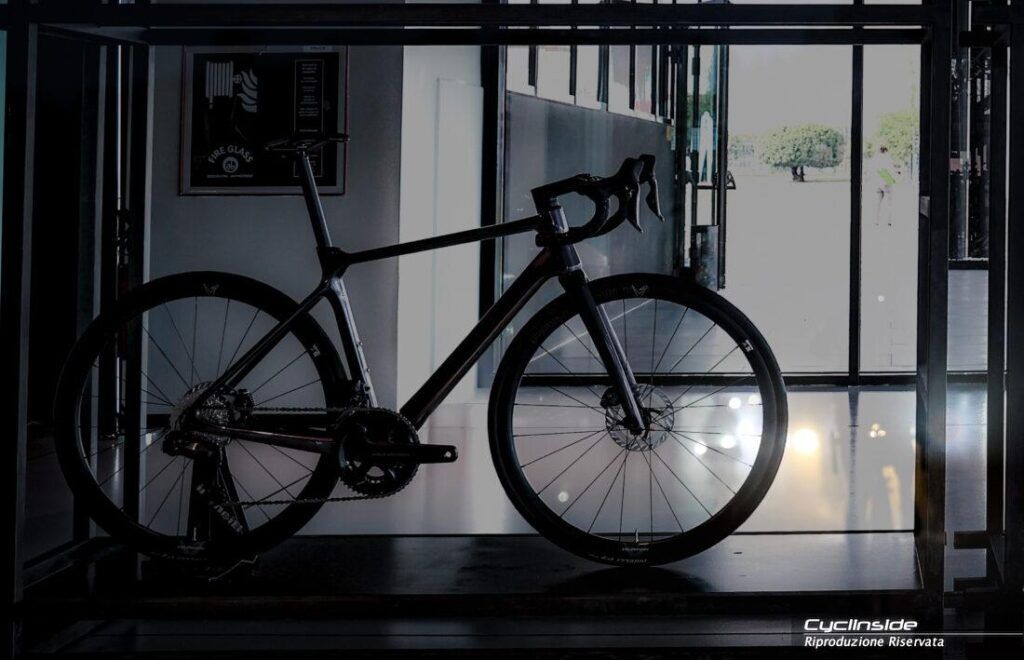
Lighter materials, more precise transmissions, more efficient tires: everything has changed without altering the basic structure. The diamond frame, the chain transmission, the two aligned wheels have remained the heart of a system that has already found its functional balance.
This is not a sign of backwardness, but of technological maturity. If a solution manages to survive years of development without losing effectiveness, it means that it has been optimized to the point that any changes would lead to inevitable compromises.
The bicycle as a contemporary response
In an era marked by energy crises, urban congestion and the need to reduce environmental impact, the bicycle re-emerges not as nostalgia, but as a rational response. It is not a return to the past, but a recovery of efficiency.
Its strength lies precisely in being a “finished” technology, in the best sense of the term: it does not need to be reinvented, but understood and integrated. The modern variations, from urban bikes to gravel bikes, from cargo bikes to e-bikes, only confirm the validity of the original project, adapting it to new contexts without distorting it.
In this sense, the bicycle is not just a means of transport, but an engineering lesson applied to daily life. A silent reminder that progress doesn’t always equal complexity, and that sometimes the best solution is the one that does more with less.
And we have a lot to tell you about this. Tool for fun, competition and research.