
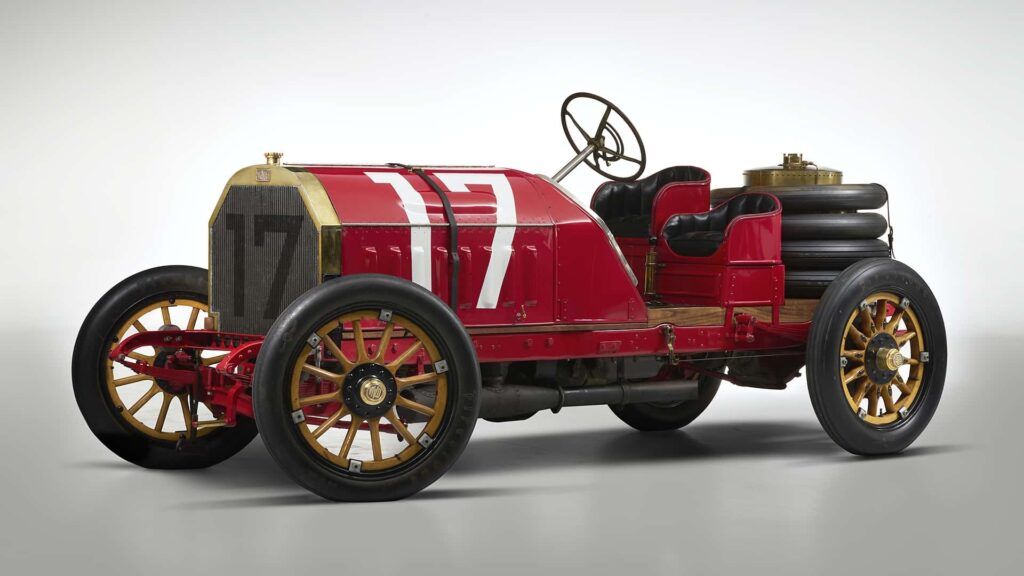

In 2026 the name Italian will return to the streets. The DR Groupin fact, announced a few months ago the acquisition of the Italian brand, which wrote important pages in the country’s automotive history over 100 years ago.
To truly understand the symbolic weight of this return it is necessary to look back at one of the most dense and fascinating stories of early Italian motoring.
The origins
Founded in Turin in 1903 by Matteo Ceirano, Itala was born in the heart of the first Italian automotive industrial district. From the very beginning it stood out for its construction quality and advanced technical vision, which allowed it to quickly establish itself as one of the main national companies, second only to Fiat in terms of production volumes. The first models, like the 16 HP e 24 HPachieve immediate sporting success, helping to build a reputation based on robustness, reliability and performance.
Fonte: RM Sotheby’s
An important transition took place in 1904, when the entry of important Genoese capital led to the birth of the Italy Car Factory and the construction of a modern factory. The design was entrusted to leading figures such as the engineer Alberto Balloco, author of cars destined to mark an era. Among these, Italy stands out 100 HPthe absolute protagonist of the 1905 competitions, capable of winning the Coppa Florio and beating rivals of the caliber of the official Fiats.
The successes and the avant-garde
1906 is the year of definitive consecration with the victory at the premiere Targa Floriowhile 1907 consigns Itala to legend. The Beijing-Paris raid, won by Prince Scipione Borghese on an Itala 35/45 HP, is not just a sporting achievement but a global media event. Luigi Barzini’s story about Corriere della Sera spreads the Itala name throughout the world, contributing to fueling the prestige of the brand.
In the years preceding the First World War, Itala represented Italian industrial excellence, with a wide range, an international commercial network and cutting-edge technical solutions such as “avalve” enginessilent and refined and characterized by the absence of mechanical valves. Innovative engines, which allowed a 25% higher efficiency than the competitors of the time, but which they had production costs very high.
Photo at: RM Sotheby’s
It is precisely this exasperated search for technical perfection, combined with increasingly fragile financial management, that undermines the company’s balance.
War and decline
The world conflict marks a dramatic turning point. The conversion to the production of aeronautical engines under Hispano-Suiza license involves enormous investments which are not compensated by state orders, which were drastically reduced after the war. After the war, despite elegant and well-built models such as the 50, 51 and the luxurious six-cylinder 55, Itala struggled to intercept a profoundly changed market.
In the 1920s the attempt at revival passed through state intervention and the arrival of Giulio Cesare Cappa, who signed the refined Italian 61technically advanced but too expensive to produce.

The four-cylinder Itala racing engine with 15 liters of displacement and 120 HP (1907)
Photo at: RM Sotheby’s
At the same time, visionary projects such as the 11 and 15 single-seaters were born, authentic engineering jewels that remained at the stage of prototype. The financial difficulties worsened until the 1929 merger with the Società Anonima Officine Metallurgiche e Meccaniche di Tortona and the subsequent agreements, while the last efforts of the “new” Itala SACA in the early 1930s failed to reverse the decline.
In 1934 the curtain finally fell on what many considered “the other Fiat”, a brand capable of anticipating the future but overwhelmed by its own structural limitations.
The return announced for 2026 with the DR Automobiles group thus brings to light a history of innovation, epic undertakings and boundless ambitions, which still today represents one of the noblest chapters of the Italian automotive industry.