
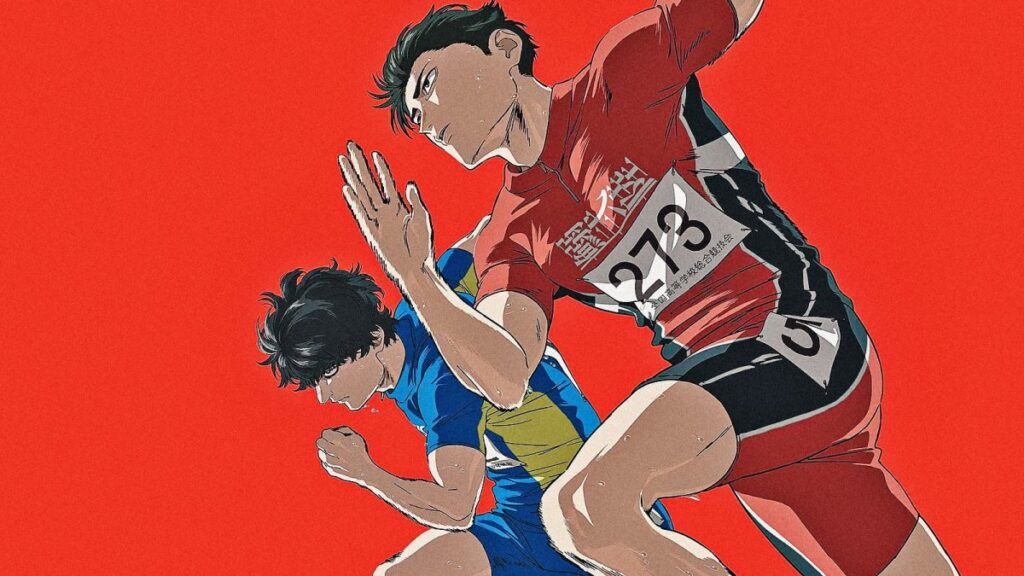

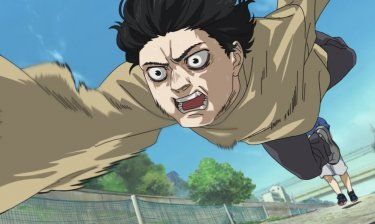
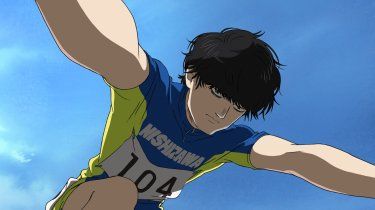

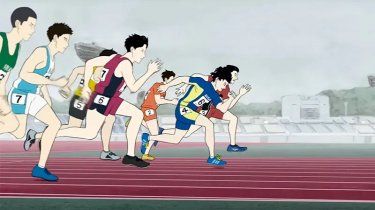

There is a particular scene, in 100 Meterswhich required more than a year of work, a frightening number of drawings and an exquisite use of different styles and techniques, from the rotoscope (the drawing traced on the basis of real people) to the sequence shot. We won’t tell you what scene it is (but if you see the film, which we strongly advise you to do, you will understand it without problems), but the paradoxical thing is that all this time and all this work then materialized in a sequence of a few tens of seconds.
Which, in the end, is also an interesting parallel between the work of an animator and the activity of a sprinter, who trains for years and then concentrates his entire life, literally, on less than ten seconds. And if this seems too “philosophical” to you, you haven’t seen anything yet.
And you, why are you running?
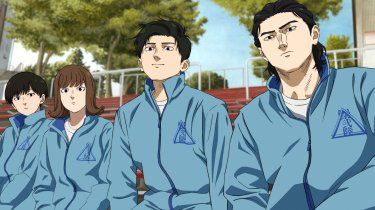
Togashi he is predestined. A boy who already seems projected towards a glorious future: he is a fast, very fast sprinter. A young runner who is capable of leaving anyone behind. For him, running so fast is a natural, almost banal act. The routine of his life is upset only when a new student arrives in his class: Komiya. Shy, introverted and awkward, Komiya has a habit of running to get away from life’s problems and difficulties, both metaphorically and literally. But Komiya is very different from Togashi: he is slow, awkward and awkward. But he has something that Togashi lacks: stubbornness, the will to progressively improve.
The relationship between the two boys, so different yet kindred spirits, develops in the few days that the two spend together. Komiya is trained by Togashi and he actually seems to have found his place, at least until the two are forced to separate.
Togashi continues to follow the path that fate seems to have paved before him, but he will soon have to deal with the harsh reality: talent alone, however enormous, may not be enough to find the answer to the central question of its existence: why should you sacrifice your whole life to run faster than others?
Do you run to outrun someone else… or yourself?
To best contextualize this, let’s face it straight away, magnificent animated film, Guillermo del Toro must be quoted when he forcefully stated that “Animation is cinema, not a genre“.
100 Meters (Hyakuemuin the original) is taken from a manga by Uoto, already the author of another title that amazed the public of enthusiasts: The Movement of the Earth, recently transposed into animation, and also in this feature film we find psychological in-depth analysis and the complex moral and existential questions that had accompanied the series on the discovery of heliocentrism (also available on Netflix).
100 Meters it should therefore be analyzed on two levels (at least): on the one hand the storywhich develops following the ups and downs of the two main characters, and which sees them face physical and emotional difficulties over the years. Running becomes not only that purpose of their existencebut what makes them mature and grow as individuals, people forced to overcome their limits and difficulties, comparing themselves (and overcoming, again both literally and metaphorically) with their rivals and their reference models.
In this sense, the film is almost more a philosophical treatise what a sports film. Often the protagonists launch into deep disquisitions on the meaning of their lives, discussing what drives them to get back on track and risk everything in less than ten seconds, with a couple of secondary characters, the stubborn Kaido and the theoretician Zaitsu, who steal the show from the two main protagonists.
Yet, although the dialogues and themes are complex, the story flows in a fluid and organic way, with particularly effective narrative peaks which then leave room for more reflective and quiet moments.
When animation becomes the Seventh Art
The second level of analysis is, however, exquisitely technical. And here, really, one can only sing the director’s praises Kenji Iwaisawa and his staff. First of all the character designer and animation manager Keisuke Kojimawhich beautifully adapted the style of mangaka Uoto, and of Hiroaki Tsutsumiwho created a soundtrack that is stripped down to the bone but, at the same time, perfect when it makes its appearance.
But it’s the mastery of managing different styles and techniqueswhich we mentioned before, to leave you impressed. The designs evolve, they deform and change to adapt to the perceptions of the protagonists and the atmosphere of the moment. The direction is capable of accompanying the spectator’s gaze both in the most banal scenes of everyday life and in the most adrenaline-filled and explosive moments of competitions. All without what you see on the screen ever appearing excessive, disturbing or chaotic.
After The First Slam Dunk (perhaps the film that comes closest, in intention and realization, to this) or the technical virtuosity of Demon Slayer: Kimetsu no Yaiba The Infinity Castle and Chainsaw Man – The Film: The Story of Reze, we can certainly also add 100 Meters to the list of Japanese animated films that have demonstrated what that actually means the animation is pure cinema.
(It’s just a shame we couldn’t see it in the room…)
Conclusions
100 Meters is a magnificent animated film, in which the great possibilities that this technique can offer are exploited impeccably in the service of a profound story of growth and self-discovery. Although the dialogues may be, in some moments, too dense and complex, the emotion that explodes with every running step is tangible and intense.
Because we like it
- A true feast for the eyes.
- The characters are well delineated.
- The scene in the rain.
What’s wrong
- Some passages may be a little heavy.
- A real shame not to have had it at the cinema, or dubbed into Italian…